Article
Received: 22 November 2022
Accepted: 10 April 2023
DOI: https://doi.org/10.1590/0034-761220220364x
Funding
Funding source: Fundação para a Ciência e a Tecnologia
Contract number: 05037/2020
Abstract: Internal marketing is a concept still little recognized and disseminated, with most of the research on this area of marketing focusing on the service sector and well-consolidated and industrialized markets. This article sheds light on the importance of internal marketing practices by identifying their impact on workers’ proactive behavior and life satisfaction while observing the effects of affective commitment and job satisfaction. The study collected 428 valid questionnaires from Portuguese workers (218 in the private sector and 210 in the public sector) and applied structural equation modeling to test the hypotheses. The results showed how adopting an internal marketing perspective can contribute to successful organizational and human resource management. It was observed that internal marketing practices lead to affective commitment and job satisfaction in both the private and public sectors, although more pronounced in the private sector. Also, the findings pointed out that the workers’ affective commitment leads to adopting proactive behavior and life satisfaction only in the public sector and that job satisfaction leads to proactive behavior and life satisfaction for workers of both the private and public sector. This study contributes to increasing understanding of internal marketing, its applicability, and its importance for workers and organizations. Additionally, comparing the private and public sectors helps understand and show how this practice matches the workers’ expectations.
Keywords: Internal marketing practices, affective commitment, job satisfaction, proactive behavior, life satisfaction, private and public national sectors.
Resumen: Este artículo tiene como objetivo arrojar luz sobre la importancia de las prácticas de marketing interno, identificando su impacto en el comportamiento proactivo y en la satisfacción con la vida de los trabajadores, a través de los efectos del compromiso afectivo y la satisfacción laboral. El marketing interno sigue siendo un concepto poco reconocido y difundido. Esta investigación compara estos efectos entre los trabajadores del sector público y privado para reforzar la importancia de dicho concepto. En total, se recogieron 428 cuestionarios válidos de trabajadores portugueses (218 del sector privado y 210 del sector público). Se utilizó el modelo de ecuaciones estructurales para testar las hipótesis de estudio. Esta investigación muestra cómo la adopción de una perspectiva de marketing interno puede contribuir a una gestión organizacional y gestión de personas exitosa. Los resultados mostraron que las prácticas de marketing interno generan compromiso afectivo y satisfacción laboral, tanto en el sector privado como en el público, aunque de forma más acentuada en el sector privado. También se constató que el compromiso afectivo conduce a la adopción de conductas proactivas y a la satisfacción con la vida de los trabajadores del sector público únicamente, y que la satisfacción laboral conduce a la adopción de esta conducta y a la satisfacción con la vida para ambos, sector público y privado. Este trabajo contribuye a una mejor comprensión del concepto de marketing interno y su aplicabilidad e importancia para los trabajadores y las organizaciones. Además, al comparar los sectores público y privado, ayuda a comprender y mostrar cómo esta práctica coincide con las expectativas de los trabajadores de estos dos sectores.
Palabras clave: Prácticas de marketing interno, compromiso afectivo, satisfacción laboral, comportamiento proactivo, satisfacción con la vida, sector público y privado.
Resumo: Este estudo pretende evidenciar a importância das práticas de marketing interno, identificando o seu impacto no comportamento proativo e na satisfação com a vida dos trabalhadores, através dos efeitos do compromisso afetivo e da satisfação no trabalho. O marketing interno continua a ser um conceito com pouco reconhecimento e divulgação, uma vez que a maioria das pesquisas relacionadas com esse campo de marketing é direcionada para o setor de serviços e concentra-se predominantemente em mercados bem estabelecidos e industrializados. Esta pesquisa compara esses efeitos entre trabalhadores do setor privado e público para reforçar a importância deste conceito, sendo que, no total, foram recolhidos 428 questionários válidos junto de trabalhadores portugueses (218 no setor privado e 210 no setor público). O modelo de equações estruturais foi utilizado para testar as hipóteses de investigação. Esta pesquisa mostra como a adoção do marketing interno pode contribuir para o sucesso da gestão organizacional e da gestão de pessoas. Os resultados mostraram que as práticas de marketing interno levam ao comprometimento afetivo e à satisfação no trabalho, tanto no setor privado como no público, embora mais pronunciadas no setor privado. Constatou-se também que o comprometimento afetivo leva à adoção de comportamentos proativos e leva à satisfação com a vida dos trabalhadores, mas apenas do setor público, e que a satisfação no trabalho leva à adoção desse comportamento e à satisfação com a vida para ambos, setor privado e público. Este trabalho contribui para uma melhor compreensão do conceito de marketing interno, da sua aplicabilidade e importância, quer para os trabalhadores, como para as organizações. Além disso, ao comparar os setores privado e público, ajuda a entender e mostrar como essa prática atende às expectativas dos trabalhadores desses dois setores.
Palavras-chave: Práticas de marketing interno, compromisso afetivo, satisfação no trabalho, comportamento proativo, satisfação com a vida, setor privado e público.
1. INTRODUCTION
Nowadays, given the market volatility, growing competition and globalization, organizations need to find new ways to differentiate themselves and achieve competitive advantage, namely, focusing on the human factor. People skills and expertise play a central role on creativity and innovation (Lent et al; 2022), on costumer orientation and service quality (Qiu, Boukis & Storey, 2022), on productivity and performance (Qiu et al; 2022), among others. Therefore, from their motivation and engagement a new source of efficiency and effectiveness on public and private services may emerge (Top, Akdere, & Tarcan, 2015). But “there are very few comparative studies of public and private innovations and even less look explicitly at sector differences in relation to the innovative behaviour of the employees” (Bysted & Hansen, 2015, p. 699). The area of marketing that deals with the efficient and effective people management is internal marketing, i.e; the philosophy of how to treat workers (Sohail & Jang, 2017) and it emerges as a tool for fundamental communication, for the improvement of work processes, interpersonal relationships, fluidity of the information circulating in the organization and the motivation, development and engagement of workers in it (Sigit & Muafi, 2022; Verčič, 2021).
“The internal marketing concept initially derives from a focus on enhancing the quality of (internal) service delivered by employees” (Qiu et al; 2022, p. 55). Although internal marketing is conventionally applied mainly to the private sector, it is necessary to demystify its use in public administration (Silva, 2015). Therefore, the study and adoption of internal marketing practices in both sectors is crucial, due to all the changes in the current market environment, implying the adoption of innovative procedures to meet customers’ needs, requirements and wishes and to achieve a true competitive advantage. The ultimate goal of the public sector is to satisfy the needs of citizens and society at large (Kelman, 2005). It is funded by taxpayers (Hvidman & Andersen, 2014) and lacks economic impulses. Consequently, workers are not motivated by financial rewards (Kelman, 2005). These organizations are also subject to legal and regulatory constraints that provide the framework for their activities (Hvidman & Andersen, 2014). which is reflected in greater bureaucratization and risk aversion and less flexibility, when compared to the private sector that aims to make a profit.
Although the topic gained prominence in 1990s (Bohnenberger, Schmidt, Damacena, & Lorento, 2019), there is still a gap in the definition and implementation of the concept (Mbengo & Chinakidzwa, 2014, Qiu et al; 2022), mainly because most definitions are conceptual and few empirical definitions have been reported (Tortosa, Moliner, & Sánchez, 2009). Consequently, there is no unified definition (Park & Tran, 2018), which is reflected in the difficulty in understanding what marketers can effectively do (Huang, Rundle-Thiele, & Chen, 2018) and how this concept proceeds in practice (Rafiq & Ahmed, 2000). This difficulty in achieving an integrative vision is part of the fact that internal marketing covers areas such as service orientation, customer orientation and internal market orientation. In addition, most studies conducted are customer-oriented, so more research is needed on all workers, not only to contact employees (Kadic-Maglajlic, Boso, & Micevski, 2017; Ozuem, Limb, & Lancaster, 2018) but also to provide internal customer guidance (Yao, Qiu, & Wei, 2019). It is also noted that most studies related to this area of marketing are directed to the services sector (Ozuem et al; 2018) and tend to focus on mostly mature and industrialized markets (Kadic-Maglajlic et al; 2017), like the United States of America or England. Therefore, the subject is largely concentrated on specific contexts, limiting knowledge about the impact of internal marketing practices on work-related outcomes (Sohail & Jang, 2017). Internal marketing (IM) remains a concept lacking awareness and dissemination because most of the research concerning this marketing field is geared towards the service industry and predominantly concentrates on well-established, industrialized markets (Leijerholt, Biedenbach, & Hultén, 2022). Additionally, the most significant advances on IM continue far from the most recent developments on the new people management frameworks (Qiu et al; 2022), namely considering the human resources role is service design due to their involvement with customers (Almaslukh, Khalid, & Sahi, 2022; Qiu et al; 2022).
Thus, to fill these gaps, the main objective of this study is to assay whether organizations in the Portuguese private and public sectors adopt internal marketing practices and if this contributes to their success and, in particular, to the behavior of their human resources. Consequently, this study intends to analyze whether these practices lead to the adoption of proactive behavior and to the life satisfaction of workers, through the effects of affective commitment and job satisfaction. These objectives draw on social cognitive theory (SCT) that posits that the beliefs of self-efficacy are central mechanisms of human “agency.” SCT explains individual and group behaviour based on the interaction between organizational environment and actions like IM or the private or public nature of the employer, employee’s individual characteristics, and the need for efficacy or performance (Bandura, 2002; Stajkovic & Luthans, 1998). Therefore, self-esteem and self-efficacy are the means by which motivational, affective, and decisional processes operate (Bandura, 2002). SCT establishes the underpinnings to understand how the public and private environments (R. Wood & Bandura, 1989) may influence how IM practices may impact proactiveness based on the self-efficacy idea (Lent et al; 2022) and life satisfaction, based on the self-esteem effects (E. S. Lee & Shin, 2017).
In order to meet these objectives, a cross-sectional study was designed, and two surveys were carried out. A total of 428 replies (218 from the private sector and 210 from the public sector) were obtained from workers in the national territory, using a non-probabilistic sampling method. Structural equation modelling was used to test the proposed hypotheses to achieve the objectives outlined. This paper seeks to better clarify the concept of internal marketing, the comparison of its effects on both public and private sector and the influence it might have on the proactive behavior of workers and on their life satisfaction.
2. CONCEPTUAL DEVELOPMENT AND RESEARCH HYPOTHESES
2.1 Internal marketing
Based on the fact that “marketing strategies and concepts that focused exclusively on external customers are no longer sufficient [to] achieve economic objectives” (Stauss & Hoffman, 2000, p. 142), there is a need for organizations to address their different audiences, including internal customers, in order to respond adequately to changes in the markets in which they operate. The concept of internal marketing was first proposed by Berry, Hensel, and Burke (1976) from a service-oriented perspective and on the premise that satisfied workers lead to satisfied customers. Over time, it turns out that “the need for an effective internal marketing strategy goes beyond contacting employees” (Bussy, Ewing, & Pitt, 2003, p. 147), leaving this approach not to be confined to the service sector (Bussy et al; 2003) and finding a greater concern for “the concept of customer orientation and/or internal market orientation [as well as] the use of marketing approaches to internally motivate workers” (J. Sousa & Rodrigues, 2014, p. 88).
Rafiq and Ahmed (2000) have argued that the literature in the internal marketing field highlights the presence of three distinct yet interconnected phases. The first phase, called “Worker Satisfaction and Motivation,” is about efforts to improve service quality (Ahmed & Rafiq, 2002) and it is defined as “considering workers as internal customers and jobs as internal products that meet their needs and desires bearing in mind the goals of the organization” (Berry et al; 1976, p. 8). The second phase, “Customer Orientation” aims to “make workers motivated and aware of customers” (Ahmed & Rafiq, 2002, p. 4). The third and final phase, “Strategy Implementation and Change Management,” defines this area of marketing as “[...] aligning, educating, and motivating workers towards organizational goals” (Winter, 1985, p. 70) for ensuring a good cross-functional integration, improved internal communication and a greater openness to change (Ahmed & Rafiq, 2002). In summary, this approach encompasses different mechanisms that aim to promote the organization’s objectives while enabling the motivation and involvement of all workers (Papasolomou, Kitchen, & Christofi, 2017).
Consequently, it is observed that internal marketing operates as a holistic management process. As a result of it all people in the organization understand and experience the business, which directly challenges the delivery of greater value to customers (Qiu et al; 2022), the alignment and creation of internal relations and the clarification of the importance of each part for corporate success (Abbas & Riaz, 2018). This perspective “looks at workers not as subordinates, but under a win-win partnership, where people feel they work for an organization that offers them something in return, such as development opportunities, an encouraging environment, and access to training, information and support” (Grönroos, 2001). In addition, the marketing techniques and tools applied in an organization enhance the satisfaction (Qiu et al; 2022), motivation, and commitment of workers (Abbas & Riaz, 2018), which will result in positive attitudes and behaviors (W. Yang, 2010) and higher levels of responsibility and power (Martey, 2014). This will, in turn, lead to the satisfaction of their professional and personal needs (Vasconcelos, 2008). It is therefore important to study this new “philosophy of how to treat workers” (Sohail & Jang, 2017, p. 68), and all its implications, as all organizations face new challenges and new demands (M. Sousa & Baptista, 2011).
2.2. The effects of internal marketing
2.2.1 Affective commitment
In the past twenty years special attention has been given to this concept, defined as worker involvement with the organization (Yao et al; 2019), because when workers are committed to their organization, the results of their work are better, with positive organizational rewards (Albdour & Altarawneh, 2014, Meredith et al; 2023). Although Meyer and Allen (1991) characterized organizational commitment according to three components (affective, continuity or instrumental, and normative), which vary depending on the relationship that workers establish with their organization, having a direct influence on the decision to remain, for the purposes of this study only the affective commitment will be considered, as it is the most important component of organizational behavior (Demirtas & Akdogan, 2015) and has the most desirable implications for individual behavior in the organization (Semedo, Coelho, & Ribeiro, 2016). Affective commitment consists of a personal and emotional connection to an idea, which in the context of work translates into the relationship between the worker and the organization (Hayat & Afshari, 2022; Semedo et al; 2016). When workers are more affectively committed, they feel more confident, creative and intelligent (Joelle & Coelho, 2017) and have a greater sense of belonging, which can be enhanced through internal marketing programs and tools (Abbas & Riaz, 2018). In addition, Abzari et al. (2011) showed that internal marketing practices could increase the organizational commitment of workers. Therefore, we propose the following hypothesis:
H1: Internal marketing practices have a positive impact on affective commitment of workers.
2.2.2 Job satisfaction
“To get good performance from good employees, one thing that must be paid attention to by the company is employees’ job satisfaction” (Jessica, Afifah, Daud, Sulistiowati, & Pebrianti, 2023, p. 55) therefore, workers are seen as an indispensable prerequisite for organizational success (Papasolomou & Vrontis, 2006). Despite the enormous focus on and research into this topic, there is still no consensus regarding the definition of job satisfaction. “Job satisfaction is a complex phenomenon with many facets” (Sarker & Ashrafi, 2018, p. 151) that includes the feelings of workers about various intrinsic elements of work (content, autonomy, hours, pressure, safety, atmosphere and work management) (Grip, Sieben, & Stevens, 2009) or extrinsic (salary level and career prospects (Grip et al; 2009; Rad & Yarmohammadian, 2006). Locke’s (1969) definition has been used over the years by several authors and it remains central in this research field. From a marketing point of view, job satisfaction has been analyzed from the perspective that workers should be treated based on the principles of customer satisfaction (Altarifi, 2014), which leads to the adoption of an internal marketing perspective. Therefore, it looks at workers as internal customers and at jobs as products, redesigning their components according to what workers value most (Ahmed & Rafiq, 2002). In addition, a considerable number of studies have addressed the effect of internal marketing on job satisfaction (Park & Tran, 2018), and many authors have found that there is a positive relationship between them (Huang et al; 2018; Martey, 2014; Sarker & Ashrafi, 2018), so it is proposed as a research hypothesis:
H2: Internal marketing practices have a positive impact on job satisfaction.
2.2.3 Proactive behavior
Crant (2000) describes four components for a better understanding of the concept of proactive behavior, which may be caused by situational and personal factors (Bateman & Crant, 1993): proactive personality; personal initiative; role breadth self-efficacy; and taking charge. This is defined as a stable willingness to take personal initiatives in a set of situations and activities (Seibert, Kraimer, & Crant, 2001) and which characterizes the people who identify opportunities and act upon them, showing initiative, action and perseverance until some change actually takes place (Crant, 2000) in different contexts and times (Horng, C. Y. Tsai, T. C. Yang, Liu, & Hu, 2016). Therefore, workers who exhibit this personality trait can process the future consequences of their decisions (Akgunduz, Alkan, & Gök, 2018). A worker who is more committed to the organization tends to be more proactive (Akgunduz et al; 2018), imputing more time, energy and talent (Hunt, Chonko, & V. R. Wood, 1985) and presenting innovative (Seibert et al; 2001) and creative initiatives (Horng et al; 2016), which is reflected in their satisfaction with working in the organization, and in better performance (Kim, Hon, & D. R. Lee, 2010) and work autonomy (Li, Liang, & Crant, 2010). In addition, some authors such as Mccormick, Guay, Colbert, and Stewart (2019) and H. Y. Tsai (2023) state that job satisfaction and commitment are related to proactive behavior, so it is proposed as a study hypothesis:
H3: Affective commitment has a positive impact on proactive behavior.
H4: Job satisfaction has a positive impact on proactive behavior.
2.2.4 Life satisfaction
Organizations have begun to realize that in order to achieve long-term success, they need to match work with the personal lives of their employees (Ivancevich, 2008; Strassburger, Wachholz, Peters, Schnitzer, & Blank, 2023). Contemporary research shows a structure consisting of three components to analyze subjective well-being (Pavot & Diener, 2008): the presence of a positive affect; the relative lack of a negative affect; and the cognitive assessment of one’s life, that is, satisfaction with life (Arthaud-Day, Rode, Mooney, & Near, 2005). For the purposes of this study, only life satisfaction will be considered as it is a central indicator of each person’s personal well-being (Tu & Zhang, 2015) which, although related to affective aspects, is partially independent of them (Pavot & Diener, 2008). Life satisfaction is defined as the overall cognitive assessment that a person makes about one’s life (Diener, Emmons, Larsen, & S. Griffin, 1985), It represents an evaluative judgment (Pavot & Diener, 2008), which depends on comparing life circumstances with a self-imposed standard or set of standards (Diener, 2009) and it varies from person to person (C. Yang, 2014). Meyer, Allen, and C. A. Smith (1993) state that workers who have an organizational experience consistent with their expectations tend to develop a strong affective commitment to their organization. Also, and according to Danish, Shahid, and Ali (2019), when workers are committed and satisfied with their work they seem to be happier with their life, since work plays a central role in any individual’s life, which can translate into the difficulty of separating these two spheres of life (Reizer, 2015). In addition, several authors state that there is a relationship between affective commitment and life satisfaction (Kumari & Afroz, 2013) and between job satisfaction and life satisfaction (Reizer, 2015), so they are proposed as research hypotheses:
H5: Affective commitment has a positive impact on life satisfaction.
H6: Job satisfaction has a positive impact on life satisfaction.
3. METHOD
The proposed conceptual model (Figure 1) presents the set of hypotheses designed to meet the objectives of the study.
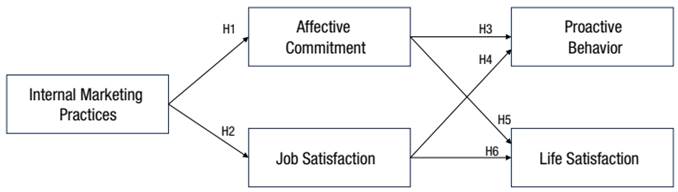
Figure 1
Conceptual model
Source: Elaborated by the authors.
4. SAMPLE AND DATA COLLECTION
4.1 Sample selection
To develop this research, which consisted of carrying out an empirical study, a quantitative approach was chosen. The samples under study are made up of Portuguese private and public sector workers. Through cross-section data collection, two surveys were applied to the public and private sectors. A total of 218 replies were collected from the private sector and 210 from the public sector, using a snowball approach. We identified 20 workers from each sector and asked them to answer and then identify 3 to 5 other workers. In order to test the 6 hypotheses under study, we used the structural equation modelling. Thus, out of a total of 950 workers contacted using this approach, 428 replies were received, resulting in a response rate of approximately 45%. In order to contact respondents, we used social networks like Facebook, LinkedIn, and email, according to the data provided by their peers.
4.2 Sample profile
Workers from the private sector are younger (67.4% are between 18 and 35 years old) and the majority are men (59.6%), while the public sector is older (59.5% are between 36 and 55 years old) and the majority are women (62.4%). Most respondents have higher education (74.8% in the private sector and 73.4% in the public) and are currently employed (85.3% in the private and 94.2% in the public), although there are more independent workers in the private sector (14.7% compared to 5.8% in the public sector). Most respondents are employees (72.5% in the private sector and 78.6% in the public), although it is in the private sector that there are more workers holding senior positions (2.3% compared to 1. 4%) and lower (22.5% compared to 11.5%) and who have been in their jobs for less than 5 years (68.8% in the private and 31.9% in the public). It is also noted that in the private sector respondents work in micro enterprises (25.2%) and large enterprises (25.6%) while the civil servants are more concentrated in large organizations (48.1%). Finally, most companies (private sector) belong to the services sector (72.5%) while, in the public sector more than 95% belong to administration.
4.3 Measures
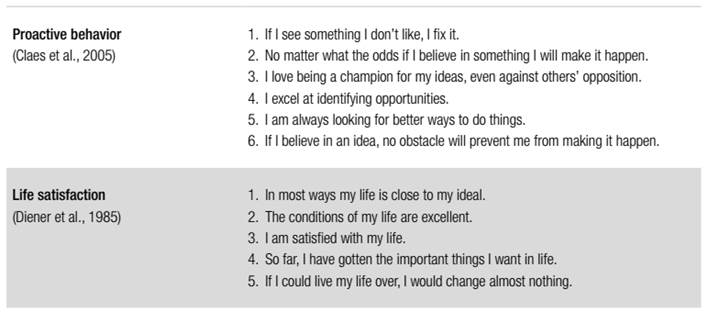
The metrics used were taken and adapted from previous research, thus not being subject to the risk of biased interpretations, guaranteeing the validity of the instrument. The metrics were translated from English to Portuguese so that they could be applied to the samples in question. The scales are measured in a 7-point Likert scale, from 1 (strongly disagree) to 7 (strongly agree) (Appendix). The internal marketing practices metric was developed by Huang and Rundle-Thiele (2014) and is subdivided into 3 dimensions, internal communication, training and internal market research. Regarding the variable affective commitment, the metric was developed by Meyer et al. (1993), and adapted to include only the items related to the affective dimension. The job satisfaction variable is based on the metric developed by Huang and Rundle-Thiele (2014) and 2 items (“Most of the days I am excited about my work “and “I feel real pleasure in my work”) from the Brayfield and Rothe (1951) scale. For the proactive behavior we use the scale adaptation developed by Bateman and Crant (1993) composed of the 6 items proposed by Claes, Beheydt, and Lemmens (2005), that is similar to the organization and individual proactivity scales developed by M. A. Griffin, Neal, and Parker (2007). Finally, regarding the variable life Satisfaction, we used the metric by Diener et al. (1985).
4.4 Common method bias
According to the recommendations of P. M. Podsakoff, MacKenzie, J. Y. Lee, and N. P. Podsakoff (2003) and to identify the common variance among all observed model variables, the Harman single factor test and a common latent factor analysis were performed. Harman’s test showed that any factor could explain more than 32.141% of the variance. It also showed that there were 5 factors with eigenvalues greater than 1, which explains 74.975% of the total variance. However, other CMV assessments should be used with the Harman test (Hulland, Baumgartner, & K. M. Smith, 2018). Consequently, a confirmatory factor analysis was performed that restricts all constituent items of the model into one common factor (P. M. Podsakoff et al; 2003) that revealed that the model fit indices did not achieve a good fit - Incremental Fit Index (IFI)= 0.584; Tucker-Lewis Index (TLI)= 0.558; Comparative Fit Index (CFI)= 0.582; Root Mean Square Error of Approximation (RMSEA)= 0.111; Chi Square/Degree of freedom (X2/df)= 6.214. With the above, it is concluded that the common method bias does not seem to be a problem.
4.5 Validity
The final measurement model has a good fit (IFI = 0.949; TLI = 0.945; CFI = 0.949; RMSEA = 0.055; X2/df = 2.308). To analyze the reliability of the variables we used the Composite Reliability (CR), showing that all values are as recommended in the literature, i.e. higher than 0.7 (Hair, Black, Babin, and Anderson, 2014) and the Average Variance Extracted (AVE) show values above 0.5, so the reliability assumption is accepted (Hair et al; 2014). Discriminant validity is also confirmed because all squared correlations between variables are lower than the extracted mean variance (AVE) (Table 1).
Squared correlations, Cronbach alpha, composite reliability, and average variances extracted
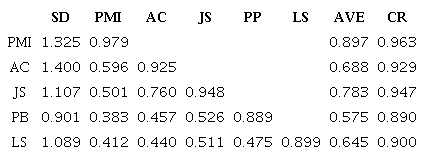
Notes: Diagonal entries (bold) are Cronbach’s alpha coefficients; AVE = Average variance extracted; CR = Composite reliability; PMI= Internal Marketing Practices; AC= Affective Commitment; JS= Job Satisfaction; PP= Proactive behavior; LS= Life Satisfaction. Source: Elaborated by the authors.
5. FINDINGS AND DISCUSSION
In order to test the proposed hypotheses, the structural equations modelling was used, revealing a good fit (IFI = 0.935; TLI = 0.930; CFI = 0.935; RMSEA = 0.062; X2/df = 2.660). A multi-group analysis was performed to compare the two subsamples used: the public sector and the private sector workers. Table 2 presents the final results.
Results
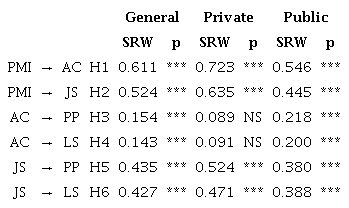
Note: p-values= ***<0.01; **<0,05; *<0,1; NS>0,1. Source: Elaborated by the authors.
As predicted in the literature, statistical support was found for the positive contribution, in the overall sample, of internal marketing practices to affective commitment (b = 0.611; p <0.01) and job satisfaction (b = 0.524; p <0.01), which supports H1 and H2 respectively. If organizations adopt internal marketing practices, they are more likely to have affectively committed workers, which leads them to engage in cooperative behavior and to integrate into a community, “flying the flag for the organization.” Consequently, organizations will be more likely to retain skilled and talented workers (Abbas & Riaz, 2018), to have a more satisfied, motivated (Huang et al; 2018), enthusiastic and enjoyable workforce (Park & Tran, 2018), as they treat workers as customers and work as products, meeting their needs and expectations (Ahmed & Rafiq, 2002).
Although supported in both sectors, these practices have a greater impact on the private sector, assuming that they are applied in a greater degree in this sector. This may be related to the characterization of the job in terms of concrete objectives and the greater possibility of career progression and rewarding based on productivity, customer care, among others. This might lead to higher and more concrete worker motivation, performing tasks that go beyond those required by their busy work, which is not the case in the public sector that is always more conservative and resistant to change, due to its immense size and rigidity of the work environment (Boyne, 2002; Hvidman & Andersen, 2014; Lopes, Dias, & Castro, 2012). Apart from this, it may also be related to the need to demystify marketing in public administration.
Regarding affective commitment, within this sample, it was found that this variable has a positive impact on proactive behavior (b = 0.154; p<0.01) and life satisfaction (b = 0.143; p<0.01), as predicted in the literature (Mccormick et al; 2019). Workers who are more committed to their employers are more satisfied with their work environment and with the organization they belong to. They tend to adopt a proactive behavior and they are more likely to produce better results because they are willing to perform an extra effort, to allocate more time, energy and creativity to their tasks (Hunt et al; 1985), and extra work, reflected in better performance (Kim et al; 2010; Mccormick et al; 2019) and the success of their organizations. Concerning the link with life satisfaction, Meyer et al. (1993) state that if workers feel satisfied with their organizational experience, they are more willing to develop a strong affective commitment and greater identification to their organization. In addition, committed workers tend to be more satisfied with their lives (Danish et al; 2019): the time they spend in the workplace is an important part of their lives. Furthermore, work is an important part of their life (Reizer, 2015). Consequently, the satisfaction they feel about their work experience, translated into this commitment is transferred to their personal life, increasing their life satisfaction (Kumari & Afroz, 2013).
Comparing the two sectors, only the public sector supports these two hypotheses. Apparently, workers in this sector might work according to the sense of public mission, in favor of people, regions, country and society in general and their links to the employer tend to be more stable as they satisfy their personal interests (Lopes et al; 2012). Therefore, this might explain the weak link between performance and rewards (Boyne, 2002). Consequently, in the public sector, affective commitment is more likely to encourage workers to make an extra effort and have a positive attitude towards work (Lopes et al; 2012), while in the private sector these outcomes might be more based on rewards.
Finally, considering the data collected, regarding job satisfaction, it has a positive impact on proactive behavior (b= 0.435; p <0.01) and life satisfaction (b = 0.427; p <0.01), as predicted in the literature. Satisfied workers tend to perform better (Kim et al; 2010), have greater autonomy at work (Li et al; 2010) and reduce dysfunctional behavior (Park & Tran, 2018), because they feel less exploited and less pressured at work (Awan, Siddiquei, Jabbar, Abrar, & Baig, 2015). Satisfaction at work appears to have a significant influence at both professional and personal levels, as work nowadays plays a central role in the life of any individual, both emotionally and in terms of the amount of time they devote to their work and their organization (Reizer, 2015). In addition, satisfied workers tend to develop a proactive behavior and tend to create more favorable conditions for personal success at work (Li et al; 2010). When workers are seen and treated like customers and their satisfaction becomes the priority of the internal marketing practices, they tend to put extra effort into performing their tasks and even go far beyond what might be expected of them: they might make suggestions or even involve themselves in actions and changes to improve the organization’s performance (Mccormick et al; 2019).
In the considered sample, even if these hypotheses are supported in both sectors, IM practices and job satisfaction appear to have a greater impact on the private sector. SCT shows how internal environment is a crucial part of the interaction between the organization actions and the employees’ decisions and behaviors (Stajkovic & Luthans, 1998). Possible explanation for this may be related to the fact that this sector is more decentralized in terms of communication and decision-making, allowing them to have greater autonomy and openness to adopt more creative behaviors and initiatives, and to assign more stimuli and rewards, which is reflected not only in terms of work outcomes, but also in the personal sphere (Boyne, 2002; Lopes et al; 2012; Hvidman & Andersen, 2014). In the private sector, job satisfaction may be influenced by factors such as company values, alignment with personal values, and opportunities for professional growth, while in public sector job security is often perceived as higher compared to the private sector, where layoffs and restructurings are more common (Almasluk et al; 2021; Qiu et al; 2022). Regarding affective commitment, the private sector is typically more driven by market competition and performance targets. This can create higher levels of performance pressure and individual accountability while the public sector often has a mission-oriented focus, providing services to the community and working towards the public good (Top et al; 2015). This sense of purpose and contribution to society can positively impact job satisfaction and employees’ overall life satisfaction.
6. CONCLUSIONS
Internal marketing arises from the need for organizations to differentiate themselves in face of the current market environment and to achieve actual competitive advantage, based on their intangible resources. Although this topic gained significance in the 1990s (Bohnenberger et al; 2019), there is still a gap in the definition and implementation of the concept (Mbengo & Chinakidzwa, 2014). The main objective of this study is to understand whether the adoption of internal marketing practices contributes to the overall success of the organization through their people management, in particular, at the individual level, and if this contribution is similar in both private and public sectors. To this end, we sought to understand how internal marketing practices impact affective commitment and job satisfaction and whether they relate to the adoption of a proactive behavior and life satisfaction. The results showed, in the context of this sample, that internal marketing practices impact affective commitment and job satisfaction in both sectors, although with a greater effect on the private sector. It appears that internal marketing practices and motivational policies might be stronger and more effective in the private sector. It was also found that affective commitment leads to the adoption of proactive behavior and life satisfaction although only supported in the public sector; and that job satisfaction has implications for the adoption of a proactive behavior and life satisfaction in both sectors.
The differences found may be related to the characteristics underlying each sector. While the private sector is more decentralized in the way it functions and gives more benefits and incentives to workers if they perform better and more creatively, with a view to making a profit (Hvidman & Andersen, 2014), the public sector is broader, hierarchically more rigid (Boyne, 2002; Hvidman & Andersen, 2014; Lopes et al; 2012), its communication takes place in a more traditional way and its purposes are compatible with the mission of the civil service, i.e. of a more civic and social nature (Hvidman & Andersen, 2014). Stability might be the main reward in this sector.
In fact, internal marketing practices are understood to influence organizational success as a whole as well as its people management, so their adoption brings added benefits if organizations want to survive in today’s marketplace, differ from competition and achieve a stable and consolidated competitive advantage.
7. CONTRIBUTIONS AND LIMITATIONS
7.1 Theoretical contributions
Internal marketing is a fundamental communication tool for the improvement of work processes, interpersonal relationships, the flow with which information circulates in the organization and the motivation, involvement, and development of workers. Consequently, this paper provides 3 major inputs: (1) identifies the effects of internal marketing, from traditional definitions to an empirical application; (2) operationalizes the concept by identifying internal marketing action practices applied in both public and private sectors and (3) identifies how such internal marketing can influence work outcomes, such as proactive behavior and life satisfaction through the effects of affective commitment and job satisfaction. Therefore, it rises the likelihood that the effects of internal marketing are strengthened by the effects of job satisfaction in the private sector and by the effects of effective commitment in the public sector, bringing clues to further investigation in this field. Additionally, these results are based on samples of non-frontline workers, who were excluded from research priorities in the past. Drawing on SCT, cognitive factors can help understand how employees perceive and interpret internal marketing practices, including their understanding of organizational values, goals, and communication messages. By examining cognitive factors, researchers can assess how employees’ mental representations of internal marketing initiatives influence their job satisfaction, engagement, and proactiveness, where support takes an especial place.
It is also noteworthy that this is an innovative study for the Portuguese organizational culture, because it comparatively challenges the applicability and consequences of internal marketing, both in the national private and public sectors. As a result, it differs from most studies, often concerned with the service sector (Ozuem et al; 2018) and mostly applied in the United States of America and England (Sohail & Jang, 2017) or other developed countries.
7.2 Practical contributions
Internal marketing looks at workers as if they were the organization’s first market (Grönroos, 2001), so it cannot be ignored in a constantly changing and increasingly complex world as it impacts directly work results and individual and corporate performance. Consequently, the efficient and effective management of human resources is considered crucial due to the challenges they have in terms of organizational success, whether in the private or public sectors. Thus, organizations must meet the needs and expectations of their workers and redesign the components of the work, as far as possible, according to these characteristics, in order to improve the link between the organization and the workers and have them really “fly the flag for the organization,” showing preference for it and advertising it for its good practices. This research highlights as well the importance these practices might have for the public sector as far as it is more or less researched and used in the private sector (Costa, Salles, & Fontes, 2010).
Thus, people managers should provide activities that impact internal relationships and customer orientation, such as training, internal communication, management support or internal market research, as workers will feel valued and respected, and the organization will know their own strengths and areas for possible improvement. This research presents interesting content that calls the attention of organizations to observe an internal marketing outlook, given all the repercussions that it might have for its survival in the market and for achieving a true competitive advantage.
In the public sector, Internal marketing strategies, such as effective communication, training and development programs, recognition, and employee involvement initiatives, can significantly increase employee engagement and motivation. By keeping employees informed, providing them with opportunities for growth and recognition, and involving them in decision-making processes, internal marketing helps create a positive work environment that contributes to higher commitment, job satisfaction and proactiveness. Internal marketing strategies help create a sense of belonging and purpose among employees in the private sector. By effectively communicating the organization’s mission, values, and objectives, internal marketing ensures that employees understand how their roles contribute to the overall success of the company. This alignment fosters a sense of engagement, job satisfaction, and proactiveness.
7.3 Limitations and future research
This research is based on a cross-sectional study with two samples, one for the private sector (218 workers) and one for the public sector (210 workers). In future studies it is proposed to consider more expressive samples collected through probabilistic sampling methods in order to generalize the results. In addition, the surveys were conducted in the Portuguese context, so the results may not be replicated in other contexts. Adoption or combination with other research methodologies (e.g; qualitative analysis using interviews) could also be considered in order to obtain a more consolidated knowledge on the subject, namely longitudinal research that may provide a better understanding of the causalities proposed. The results obtained should foster new research in the area of internal marketing, considering that there are interesting new links that can be developed and tested in other studies, in addition to the possible introduction of other variables, such as affect, engagement, empowerment and a new centrality of the work-life balance.
ACKNOWLEDGMENTS
This work has been funded by national funds through Fundação para a Ciência e a Tecnologia (FCT), I.P; Project UIDB/05037/2020.
REFERENCES
Abbas, A; & Riaz, M. T. (2018). The effect of internal marketing dimensions on organizational commitment of employees: an investigation among Private Banks in Faisalabad, Pakistan. European online Journal of Natural and Scocial Sciences, 7(1), 147-165. Retrieved from https://european-science.com/eojnss/article/view/5270
Abzari, M; Ghorbani, H; & Madani, F. A. (2011). The effect of internal marketing on organizational commitment from market-orientation viewpoint in hotel industry in Iran. International Journal of Marketing Studies, 3(1), 147-155. Retrieved fromhttps://doi.org/10.5539/ijms.v3n1p147
Ahmed, P; & Rafiq, M. (2002). Internal marketing: tools and concepts for customer-focused management. Woburn, MA: Butterworth-Heinemann
Akgunduz, Y; Alkan, C; & Gök, Ö. A. (2018). Perceived organizational support, employee creativity and proactive personality: the mediating effect of meaning of work. Journal of Hospitality and Tourism Management, 34, 105-114. Retrieved fromhttps://doi.org/10.1016/j.jhtm.2018.01.004
Albdour, A. A; & Altarawneh, I. I. (2014). Employee engagement and organizational commitment: Evidence from Jordan. International Journal of Business, 19(2), 192-212. Retrieved from https://ijb.cyut.edu.tw/var/file/10/1010/img/860/V192-5.pdf
Almaslukh, F. M. O; Khalid, H; & Sahi, A. M.(2022). The impact of internal marketing practices on employees’ job satisfaction during the COVID-19 pandemic: the case of the Saudi Arabian banking sector. Sustainability, 14(15), 9301. Retrieved fromhttps://doi.org/10.3390/su14159301
Altarifi, S. (2014). Internal marketing activities in higher education. International Journal of Business and Management, 9(6), 126-138. Retrieved fromhttps://doi.org/10.5539/ijbm.v9n6p126
Arthaud-Day, M. L; Rode, J. C; Mooney, C. H; & Near, J. P. (2005). The subjective well-being construct: a test of its convergent, discriminant, and factorial validity. Social Indicators Research, 74(3), 445-476. Retrieved fromhttps://doi.org/10.1007/s11205-004-8209-6
Awan, H. M; Siddiquei, A. N; Jabbar, A; Abrar, M; & Baig, S. A. (2015). Internal marketing and customer loyalty: a dyadic analysis. Journal of Service Science and Management, 8(2), 216-228. Retrieved fromhttps://doi.org/10.4236/jssm.2015.82024
Bandura, A. (2002). Social cognitive theory in cultural context. Applied psychology, 51(2), 269-290. Retrieved fromhttps://doi.org/10.1111/1464-0597.00092
Bateman, T; & Crant, J. M. (1993). The proactive component of organizational behavior: a measure and correlates. Journal of Organizational Behavior, 14(2), 103-118. Retrieved fromhttps://doi.org/10.1002/job.4030140202
Berry, L; Hensel, J; & Burke, M. (1976). Improving retailer capability for effective consumerism response. Journal of Retailing, 52(3), 3-14.
Bohnenberger, M. C; Schmidt, S; Damacena, C; & Lorento, F. (2019). Internal marketing: a model for implementation and development. Dimensión Empresarial, 17(1), 7-22. Retrieved fromhttps://doi.org/10.15665/dem.v17i1.1657
Boyne, G. A. (2002). Public and private management: what’s the difference? Journal of Management Studies, 39(1), 97-122. Retrieved fromhttps://doi.org/10.1111/1467-6486.00284
Brayfield, A. H; & Rothe, H. F. (1951). An index of job satisfaction. Journal of Applied Psychology, 35(5), 307-311. Retrieved fromhttps://doi.org/10.1037/h0055617
Bussy, N. M; Ewing, M. T; & Pitt, L. F. (2003). Stakeholder theory and internal marketing communications: A framework for analysing the influence of new media. Journal of Marketing Communications, 9(3), 147-161. Retrieved fromhttps://doi.org/10.1080/1352726032000129890
Bysted, R; & Hansen, J. R. (2015). Comparing public and private sector employees’ innovative behaviour: Understanding the role of job and organizational characteristics, job types, and subsectors. Public Management Review, 17(5), 698-717. Retrieved fromhttps://doi.org/10.1080/14719037.2013.841977
Claes, R; Beheydt, C; & Lemmens, B. (2005). Unidimensionality of abbreviated proactive personality scales across cultures. Applied Psychology: An International Review, 54(4), 476-489. Retrieved fromhttps://doi.org/10.1111/j.1464-0597.2005.00221.x
Costa, I. S. A; Salles, D. M. R; & Fontes, J. R Filho. (2010). Influence of organisational settings on work values and reward preferences. Revista de Administração Pública, 44(6), 1429-1452. Retrieved fromhttps://doi.org/10.1590/S0034-76122010000600008
Crant, J. M. (2000). Proactive behavior in organizations. Journal of Management, 26(3), 435-462. Retrieved fromhttps://doi.org/10.1177/014920630002600304
Danish, R. Q; Shahid, R; & Ali, H. F. (2019). Factors affecting life satisfaction of employees under financial threat. SEISENSE Journal of Management, 2(1), 85-98. Retrieved fromhttps://doi.org/10.33215/sjom.v2i1.82
Demirtas, O; & Akdogan, A. A. (2015). The effect of ethical leadership behavior on ethical climate, turnover intention, and affective commitment. Journal of Business Ethics, 130, 59-67. Retrieved fromhttps://doi.org/10.1007/s10551-014-2196-6
Diener, E. (2009). Assessing well-being. New York, NY: Springer. Retrieved fromhttps://doi.org/10.1007/978-90-481-2354-4
Diener, E; Emmons, R. A; Larsen, R. J; & Griffin, S. (1985). The satisfaction with life scale. Journal of Personality Assessment, 49(1), 71-75. Retrieved fromhttps://doi.org/10.1207/s15327752jpa4901_13
Griffin, M. A; Neal, A; & Parker, S. (2007). Positive behaviour in uncertain and interdependent contexts. Academy of Management Journal, 50(2), 327-347. Retrieved fromhttps://doi.org/10.5465/AMJ.2007.24634438
Grip, A; Sieben, I; & Stevens, F. (2009). Are more competent workers more satisfied? Labour, 23(4), 589-607. Retrieved fromhttps://doi.org/10.1111/j.1467-9914.2009.00463.x
Grönroos, C. (2001). Service management and marketing: a customer relationship management approach (2a ed.). Chichester, UK: John Wiley & Sons.
Hair, J; Black, W; Babin, B; & Anderson, R. (2014). Multivariate data analysis (7a ed.). Harlow, UK: Pearson Education Limited.
Hayat, A; & Afshari, L. (2022). CSR and employee well-being in hospitality industry: a mediation model of job satisfaction and affective commitment. Journal of Hospitality and Tourism Management, 51, 387-396. Retrieved fromhttps://doi.org/10.1016/j.jhtm.2022.04.008
Horng, J. S; Tsai, C. Y; Yang, T. C; Liu, C. H; & Hu, D. C. (2016). Exploring the relationship between proactive personality, work environment and employee creativity among tourism and hospitality employees. International Journal of Hospitality Management, 54, 25-34. Retrieved fromhttps://doi.org/10.1016/j.ijhm.2016.01.004
Huang, Y. T; & Rundle-Thiele, S. (2014). The moderating effect of cultural congruence on the internal marketing practice and employee satisfaction relationship: An empirical examination of Australian and Taiwanese born tourism employees. Tourism Management, 42, 196-206. Retrieved fromhttps://doi.org/10.1016/j.tourman.2013.12.005
Huang, Y. T; Rundle-Thiele, S; & Chen, Y. H. (2018). Extending understanding of the internal marketing practice and employee satisfaction relationship: a budget Chinese airline empirical examination. Journal of Vacation Marketing, 25(1), 88-98. Retrieved fromhttps://doi.org/10.1177/1356766718757270
Hulland, J; Baumgartner, H; & Smith, K. M. (2018). Marketing survey research best practices: evidence and recommendations from a review of jams articles. Journal of the Academy of Marketing Science, 46(1), 92-108. Retrieved fromhttps://doi.org/10.1007/s11747-017-0532-y
Hunt, S. D; Chonko, L. B; & Wood, V. R. (1985). Organizational commitment and marketing. Journal of Marketing, 49(1), 112-126. Retrieved fromhttps://doi.org/10.2307/1251181
Hvidman, U; & Andersen, S. C. (2014). Impact of performance management in public and private organizations. Journal of Public Administration Research and Theory, 24(1), 35-58. Retrieved from https://doi.org/10.1093/jopart/mut019
Ivancevich, J. (2008). Gestão de recursos humanos (10a ed.). São Paulo, SP: McGraw-Hill.
Jessica, N; Afifah, N; Daud, I Sulistiowati; & Pebrianti, W. (2023). The effect of work environment and work-life balance on job satisfaction: work stress as a mediator. Journal of Economics, Management and Trade, 29(1), 54-65. Retrieved fromhttps://doi.org/10.9734/jemt/2023/v29i11074
Joelle, M; & Coelho, A. (2017). The impact of spirituality at work on workers’ attitudes and individual performance. The International Journal of Human Resource Management, 30(7), 1111-1135. Retrieved fromhttps://doi.org/10.1080/09585192.2017.1314312
Kadic-Maglajlic, S; Boso, N; & Micevski, M. (2017). How internal marketing drive customer satisfaction in matured and maturing European markets? Journal of Business Research, 86, 291-299. Retrieved fromhttps://doi.org/10.1016/j.jbusres.2017.09.024
Kelman, S. (2005). Public management needs help! Academy of Management Journal, 48(6), 967-969. Retrieved fromhttps://doi.org/10.5465/amj.2005.19573099
Kim, T. Y; Hon, A. H. Y; & Lee, D. R. (2010). Proactive personality and employee creativity: the effects of job creativity requirement and supervisor support for creativity. Creativity Research Journal, 22(1), 37-45. Retrieved fromhttps://doi.org/10.1080/10400410903579536
Kumari, N; & Afroz, N. (2013). The impact of affective commitment in employees life satisfaction. Global Journal of Management and Business Research Interdisciplinary, 13(7), 25-20. Retrieved from https://globaljournals.org/GJMBR_Volume13/4-The-Impact-of-Affective-Commitment.pdf
Lee, E. S; & Shin, Y. J. (2017). Social cognitive predictors of Korean secondary school teachers’ job and life satisfaction. Journal of Vocational Behavior, 102, 139-150. Retrieved fromhttps://doi.org/10.1016/j.jvb.2017.07.008
Leijerholt, U; Biedenbach, G; & Hultén, P. (2022). Internal brand management in the public sector: the effects of internal communication, organizational practices, and PSM on employees’ brand perceptions. Public Management Review, 24(3), 442-465. Retrieved from https://doi.org/10.1080/14719037.2020.1834607
Lent, R. W; Morris, T. R; Wang, R. J; Moturu, B. P; Cygrymus, E. R; & Yeung, J. G. (2022). Test of a social cognitive model of proactive career behavior. Journal of Career Assessment, 30(4), 756-775. Retrieved fromhttps://doi.org/10.1177/10690727221080948
Li, N; Liang, J; & Crant, J. M. (2010). The role of proactive personality in job satisfaction and organizational citizenship behavior: a relational perspective. Journal of Applied Psychology, 95(2), 395-404. Retrieved fromhttps://doi.org/10.1037/a0018079
Locke, E. A. (1969). What is job satisfaction? Organizational Behavior and Human Performance, 4(4), 309-336. Retrieved fromhttps://doi.org/10.1016/0030-5073(69)90013-0
Lopes, I; Dias, J; & Castro, F. (2012). Contrato psicológico na administração pública portuguesa: termos do seu conteúdo. International Journal of Development and Educational Psychology, 4(1), 267-279. Retrieved fromhttps://www.redalyc.org/pdf/3498/349832337029.pdf
Martey, E. M. (2014). The impact of internal marketing on employee performance in the insurance industry of Ghana. International Journal of Research, 1(7), 1175-1189. Retrieved fromhttps://journals.pen2print.org/index.php/ijr/article/view/473/430
Mbengo, P; & Chinakidzwa, M. (2014). Internal marketing elements’ influence on employee performance: a case of Harare Institute of Technology in Zimbabwe. Journal of Business Administration and Education, 5(2), 191-207. Retrieved fromhttps://citeseerx.ist.psu.edu/pdf/cd4bcb7bfc48625078e1fb2885b76a60e0d8464a
Mccormick, B; Guay, R; Colbert, A; & Stewart, G. (2019). Proactive personality and proactive behaviour: perspectives on person-situation interactions. Journal of Occupational and Organizational Psychology, 92(1), 30-51. Retrieved fromhttps://doi.org/10.1111/joop.12234
Meredith, C; Moolenaar, N; Struyve, C; Vandecandelaere, M; Gielen, S; & Kyndt, E. (2023). The importance of a collaborative culture for teachers’ job satisfaction and affective commitment. European Journal of Psychology of Education, 38(1), 43-62. Retrieved fromhttps://doi.org/10.1007/s10212-022-00598-w
Meyer, J. P; & Allen, N. J. (1991). A three-component conceptualization of organizational commitment. Human Resource Management Review, 1(1), 61-89. Retrieved fromhttps://doi.org/10.1016/1053-4822(91)90011-Z
Meyer, J. P; Allen, N. J; & Smith, C. A. (1993). Commitment to organizations and occupations: extension and test of a three-component conceptualization. Journal of Applied Psychology, 78(4), 538-551. Retrieved fromhttps://doi.org/10.1037/0021-9010.78.4.538
Ozuem, W; Limb, N; & Lancaster, G. (2018). Exploring the locus of internal marketing. Journal of Strategic Marketing, 26(4), 356-372. Retrieved fromhttps://doi.org/10.1080/0965254X.2016.1211729
Papasolomou, I; & Vrontis, D. (2006). Building corporate branding through internal marketing: the case of the UK retail bank industry. Journal of Product & Brand Management, 15(1), 37-47. Retrieved fromhttps://doi.org/10.1108/10610420610650864
Papasolomou, I; Kitchen, P; & Christofi, M. (2017). Internal marketing under disguise: Misplaced application. Journal of Customer Behaviour, 16(1), 5-18. Retrieved fromhttps://doi.org/10.1362/147539217X14909732699453
Park, J. H; & Tran, T. B. H. (2018). Internal marketing, employee customer-oriented behaviors, and customer behavioral responses. Psychology and Marketing, 35(6), 412-426. Retrieved fromhttps://doi.org/10.1002/mar.21095
Pavot, W; & Diener, E. (2008). The satisfaction with life scale and the emerging construct of life satisfaction. The Journal of Positive Psychology, 3(2), 137-152. Retrieved fromhttps://doi.org/10.1080/17439760701756946
Podsakoff, P. M; MacKenzie, S. B; Lee, J. Y; & Podsakoff, N. P. (2003). Common method biases in behavioral research: a critical review of the literature and recommended remedies. Journal of Applied Psychology, 88(5), 879-903. Retrieved fromhttps://doi.org/10.1037/0021-9010.88.5.879
Qiu, J; Boukis, A; & Storey, C. (2022). Internal marketing: a systematic review. Journal of Marketing Theory and Practice, 30(1), 53-67. Retrieved fromhttps://doi.org/10.1080/10696679.2021.1886588
Rad, A. M. M; & Yarmohammadian, M. H. (2006). A study of relationship between managers’ leadership style and employees’ job satisfaction. Leadership in Health Services, 19(2), 11-28. Retrieved fromhttps://doi.org/10.1108/13660750610665008
Rafiq, M; & Ahmed, P. K. (2000). Advances in the internal marketing concept: definition, synthesis and extension. Journal of services marketing, 14(6), 449-462. Retrieved fromhttps://doi.org/10.1108/08876040010347589
Reizer, A. (2015). Influence of employees attachment styles on their life satisfaction as mediated by job satisfaction and burnout. Journal of Psychology, 149(4), 356-377. Retrieved fromhttps://doi.org/10.1080/00223980.2014.881312
Sarker, A. R; & Ashrafi, D. M. (2018). The relationship between internal marketing and employee job satisfaction: a study from retail shops in Bangladesh. Journal of Business and Retail Management Research, 12(3), 149-159. Retrieved fromhttps://doi.org/10.24052/JBRMR/V12IS03/ART-13
Seibert, S; Kraimer, M; & Crant, J. M. (2001). What do proactive people do? A longitudinal model linking proactive personality and career success. Personnel Psychology, 54(4), 845-874. Retrieved fromhttps://doi.org/10.1111/j.1744-6570.2001.tb00234.x
Semedo, A. S. D; Coelho, A. F. M; & Ribeiro, N. M. P. (2016). Effects of authentic leadership, affective commitment and job resourcefulness on employees’ creativity and individual performance. Leadership & Organization Development Journal, 37(8), 1038-1055. Retrieved fromhttps://doi.org/10.1108/LODJ-02-2015-0029
Sigit, H; & Muafi, M. (2022). The influence of internal marketing and organizational commitment on employee performance mediated by psychological capital. International Journal of Research in Business and Social Science, 11(8), 177-190. Retrieved fromhttps://doi.org/10.20525/ijrbs.v11i8.2179
Silva, E. C. (2015). Marketing público: uma plataforma de “trocas” no setor público. Revista Eletrônica de Administração, 14(1), 20-42. Retrieved from http://periodicos.unifacef.com.br/rea/article/view/748/809
Sohail, M. S; & Jang, J. (2017). Understanding the relationships among internal marketing practices, job satisfaction, service quality and customer satisfaction: an empirical investigation of Saudi Arabia’s service employees. International Journal of Tourism Sciences, 17(2), 67-85. Retrieved fromhttps://doi.org/10.1080/15980634.2017.1294343
Sousa, J; & Rodrigues, R. (2014). As implicações dos programas de marketing interno na orientação para o mercado interno, no sector transformador de cortiça português. International Journal of Marketing, Communication and New Media, 2(2), 81-104. Retrieved from http://u3isjournal.isvouga.pt/index.php/ijmcnm/article/view/34/20
Sousa, M; & Baptista, C. (2011). Como fazer investigação, dissertações, teses e relatórios. Lisboa, Portugal: Lidel.
Stajkovic, A. D; & Luthans, F. (1998). Social cognitive theory and self-efficacy: goin beyond traditional motivational and behavioral approaches. Organizational dynamics, 26(4), 62-74. Retrieved fromhttps://doi.org/10.1016/S0090-2616(98)90006-7
Stauss, B; & Hoffman, F. (2000). Minimizing internal communication gaps by using business television. In B. Lewis, & R. Varey (Eds.), Internal marketing: directions for management (pp. 141-159). London, UK: Routledge.
Strassburger, C; Wachholz, F; Peters, M; Schnitzer, M; & Blank, C. (2023). Organizational leisure benefits-a resource to facilitate employees’ work-life balance? Employee Relations: The International Journal, 45(3), 585-602. Retrieved fromhttps://doi.org/10.1108/ER-10-2021-0428
Top, M; Akdere, M; & Tarcan, M. (2015). Examining transformational leadership, job satisfaction, organizational commitment and organizational trust in Turkish hospitals: public servants versus private sector employees. The international journal of human resource management, 26(9), 1259-1282. Retrieved fromhttps://doi.org/10.1080/09585192.2014.939987
Tortosa, V; Moliner, M. A; & Sánchez, J. (2009). Internal market orientation and its influence on organisational performance. European Journal of Marketing, 43(11/12), 1435-1456. Retrieved fromhttps://doi.org/10.1108/03090560910989975
Tsai, H. Y. (2023). Do you feel like being proactive day? How daily cyberloafing influences creativity and proactive behavior: the moderating roles of work environment. Computers in Human Behavior, 138, 107470. Retrieved fromhttps://doi.org/10.1016/j.chb.2022.107470
Tu, Y; & Zhang, S. (2015). Loneliness and subjective well-being among Chinese undergraduates: the mediating role of self-efficacy. Social Indicators Research, 124, 963-980. Retrieved fromhttps://doi.org/10.1007/s11205-014-0809-1
Vasconcelos, A. (2008). Broadening even more the internal marketing concept. European Journal of Marketing, 42(11/12), 1246-1264. Retrieved fromhttps://doi.org/10.1108/03090560810903664
Verčič, A. T. (2021). The impact of employee engagement, organisational support and employer branding on internal communication satisfaction. Public Relations Review, 47(1), 885-893. Retrieved fromhttps://doi.org/10.1016/j.pubrev.2021.102009
Winter, J. P. (1985). Getting your house in order with internal marketing. Health Marketing Quarterly, 3(1), 69-77. Retrieved fromhttps://doi.org/10.1300/J026v03n01_09
Wood, R; & Bandura, A. (1989). Social cognitive theory of organizational management. Academy of management Review, 14(3), 361-384. Retrieved fromhttps://doi.org/10.2307/258173
Yang, C. (2014). Does ethical leadership lead to happy workers? A Study on the impact of ethical leadership, subjective well-being, and life happiness in the Chinese culture. Journal of Business Ethics, 123, 513-525. Retrieved fromhttps://doi.org/10.1007/s10551-013-1852-6
Yang, W. (2010). Relationships among internal marketing perceptions, organizational support, job satisfaction and role behavior in healthcare organizations. International Journal of Management, 27(2), 235-242. Retrieved fromhttps://www.proquest.com/docview/745596859
Yao, T; Qiu, Q; & Wei, Y. (2019). Retaining hotel employees as internal customers: Effect of organizational commitment on attitudinal and behavioral loyalty of employees. International Journal of Hospitality Management, 76, 1-8. Retrieved from https://doi.org/10.1016/j.ijhm.2018.03.018
APPENDIX
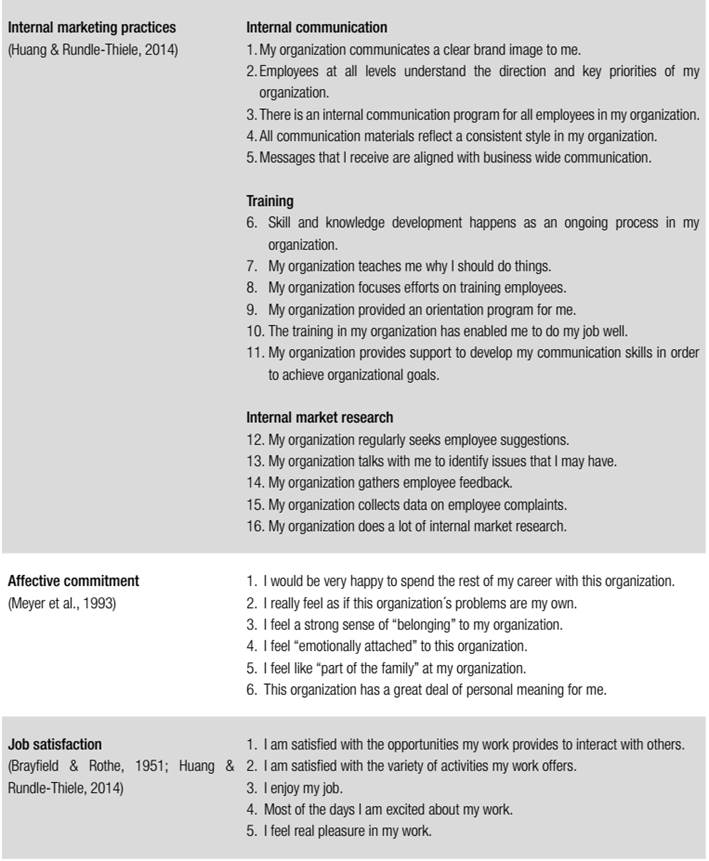
Box A
Operationalization of the constructs
Source: Elaborated by the authors.
Box A
continuation
Notes
Author notes
