Abstract:
The aim of this article is to bring awareness to the community about the danger of bullying and to present ways to avoid it through the implementation of a workshop-conference. The methodology of the study was a survey with students of an educational center in the city of Santo Domingo de los Tsachilas, Ecuador, where a workshop-conference was conducted. The study allows to infer that the incidence of school bullying in Latin America is of 70%, in Ecuador is of 69%, and in Santo Domingo de los Tsachilas is of 67%. Although the surveys have different nuances, the background is the same. The conclusions show that an elevated number of girls, boys and youngsters are bullied in school, and these results are similar to the National Survey of Children and Adolescents (ENNA, for its Spanish acronym), which was conducted in 2010 in the country. Bullying, childhood and adolescence, constitutional rights, social awareness. https://doi.org/10.15765/pnrm.v13i25.1330
Keywords:BullyingBullying,childhood and adolescencechildhood and adolescence,constitutional rightsconstitutional rights,social awarenesssocial awareness.
Resumen: El objetivo de esta investigación fue analizar El objetivo del presente artículo es el de concientizar a la comunidad del peligro del acoso escolar y las formas de evitarlo, con la aplicación de un taller-conferencia. La metodología de estudio fue la encuesta a estudiantes de un centro educativo de la ciudad de Santo Domingo de los Tsáchilas, en Ecuador, en donde se aplicó un taller-conferencia a los estudiantes. Del estudio se puede inferir que el acoso escolar está presente en América Latina, con un 70%, en Ecuador, con 69%, y en Santo Domingo de los Tsáchilas, con un 67%. A pesar de que las encuestas tienen matices diferentes, el fondo en sí es el mismo. Las conclusiones fueron que un alto número de niñas, niños y jóvenes sufren acoso escolar en el centro educativo, y que estos resultados tienen similitud con la Encuesta Nacional de la Niñez y la Adolescencia (ENNA), realizada en 2010 en el país.
Palabras clave: Acoso escolar, niñez y adolescencia, derechos constitucionales, concientización social.
Artículos de investigación científica y tecnológica
SCHOOL BULLYING IN BASIC GENERAL EDUCATION, SANTO DOMINGO DE LOS TSACHILAS INSTITUTION, ECUADOR
El acoso escolar en la educación general básica, institución santo domingo de los tsáchilas, en ecuador
Politécnico Grancolombiano

Esta obra está bajo una Licencia Creative Commons Atribución-NoComercial 4.0 Internacional.
Recepción: 18 Agosto 2016
Aprobación: 26 Julio 2019
Educational centers of Basic General Education are the culture of violence that nurtures from a series of factors and are exacerbated by what is known as “school bullying” (Machimbarrena & Garaigordobil, 2018), a fact that, based on results obtained by studies, is not a phenomenon but a pivotal problem that needs to be solved with programs aimed at decreasing it or eradicating it. There are no problems that cannot be solved and there would be no solutions without problems. Garaigordobil and Oñederra (2008) cite that “there is mounting interest and social concern about what is happening with students in educational centers. As well as progressive awareness about the importance of human rights”; not only because problems in educational centers have gone up as of today (Sierra-Varon, 2011), but because nowadays the use of mass media allows children and youngsters to become familiar with bullying, to know it exists and to understand that it is a crime which needs to be reported and eradicated (Gonzalez, Gutierrez, & Checa, 2017; Gordillo, 2012; Hidalgo-Rasmussen et al., 2015).
School bullying is not a myth, it is a tangible reality that is weaved in most educational centers in the world. Each year, globally, one in three children is bullied and 246 million children are subject to verbal abuse. According to Pozo-Ortega (2018), Latin America is the region in the world with the largest number of school bullying cases (70%); this is supported by data of the National Survey of Children and Adolescents (ENNA), which had a sample universe of homes with children under 18 years of age in continental Ecuador (excluding Galapagos). In the study, 64% of the children in schools (aged 8 to 17) declared having witnessed fights between students; 57% said they destroyed things that belonged to others; and 69% mentioned they abused or picked on younger students (Knaul & Ramirez, 2014). This report was issued in 2010 by Observatorio de la Niñez y Adolescencia and it reveals that at least 63% of the students pick on others just because they are different; 74% of them insult or mock others; while 53% are victims of robbery (Arias-Sandoval, 2018; De los Rios, Martinez, & Mackenzie, 2012).
School bullying takes place in most educational centers, and results are similar, regardless of the public or private nature of the school, the only difference being that private centers cover situations of risk in order to protect the institution’s statu quo (Machimbarrena & Garaigordobil, 2017; Moreno et al., 2012).
An anthropological observation of this phenomenon indicates its origin might go back to an early stage of humanity and that it was institutionalized with the rise of civilizations; up until the end of the last century, bullying was considered “child’s play”. A tour through the history of societies shows these have always had laws to mask school bullying when rich, white children inflict it upon poor or black people, for instance. Some articles of the new Constitution of Ecuador defend the integrity of human beings (Bazzo, 2017; Leon, Felipe, Carroza, & Ramos, 2011; Leon, Polo, Delgado, & Lazaro, 2016; Polo et al., 2015; Hernandez-Rosete, 2017; Leon, Felipe, Polo, & Fajardo, 2015; Sampen-Diaz, Aguilar-Ramos, & Tojar-Hurtado, 2017).
Accordingly, the Constitution of Ecuador states “Ecuador is a constitutional State of rights and justice…” meaning that each person is equal and must enjoy the same rights. These two articles clearly express the idea intended by the Ecuadorian State in its Article 11 paragraph 2, which states that the law shall punish any form of discrimination, and in Article 26, which manifests that it shall guarantee equality and social inclusion; moreover, Article 27, refers to a holistic development within the framework of respect to human rights. Also in the Constitution, Article 32 emphasizes on its people’s health, as defined by the World Health Organization (WHO), “a state of complete bio-psycho-social wellbeing, not just the absence of disease” (Castillo-Pulido, 2012; Cuadros-Mendoza et al., 2017; Garciga, 2013; Granero & Manzano, 2018; Shamah-Levy et al., 2017); Article 35 expresses the will to service children and youngsters with priority, and mentions the guarantee the State provides to protect them against any act of violence; Article 44 binds the family as well as the government for the comprehensive development of children and youngsters and prioritizes their rights over those of other citizens; this is explained further in Article 45, which mentions the right to physical and mental integrity; finally, paragraph 4 of Article 46 assures the protection of children and youngsters against any type of violence, abuse, sexual exploitation, or any other (Benitez-Eyzaguirre, 2017).
Evidently, the Ecuadorian State has a solid Constitution in place and protects the interest of human beings, regardless if they are children or youngsters (Bautista, Limon, Oñate, Garcia, & Rostand, 2016). Along with national laws, the Organic Law of Intercultural Education (LOEI, for its Spanish acronym) (2011) in its Article 2, paragraph “V” eradicates all forms of discrimination; Article 3, paragraph “I” refers to equality of women and men, without discrimination, and paragraph “L” observes the respect of human rights; paragraph “M” provides protection and support to students who are or have been victims of violence, abuse, sexual exploitation, and others. The culmination of the well-structured LOEI is paragraph “G” of Article 3, which permits the comprehensive, autonomous, sustainable and independent development of people in order for them to realize fulfillment as human beings (Baron, Cascone, & Martinez, 2013; Cerezo & Ato, 2010; Romera, del Rey, & Ortega, 2011; Gordillo, 2012).
School bullying is commonplace around the world and it has no distinction of race, color, social status or gender. The WHO (Castillo-Pulido, 2012; Granero & Manzano, 2018) and the UN presented a report with alarming worldwide figures: 600,000 teenagers aged 14-28 commit suicide, and almost half of the cases have something to do with bullying (Arias-Sandoval, 2018; Nashiki, 2013), this occurs both in public and private schools. The physical and mental abuse of which thousands of children and youngsters are victims is alarming; these actions have many masks and imply physical and verbal contact, insults or intended exclusion, all of which generate the same result: the victim’s emotional damage or unbalance (Elipe, Ortega, Hunter, & del Rey, 2012; Sanchez, Ortega, & Menesini, 2012; Zych, Beltran-Catalan, Ortega-Ruiz, & Llorent, 2018).
This study, conducted in a school located in the city of Santo Domingo de los Tsachilas, intended to diagnose a daily reality experienced by some of its students, it led to a workshop-conference aimed at students of the highest level of Basic General Education (eighth, ninth and tenth grades) with the objective of making them aware of school bullying and of what to do when it presents itself.
The study conducted in the institution followed the qualitative method (Hernandez, Fernandez, & Baptista, 2014; Sanchez, 2015; Patiño, & Verduzco, 2014). The method of bibliographic review was applied using the following: UNICEF’s website for Ecuador (Petersen, Feldt, Mujtaba, & Mattsson, 2008), data from the 2010 National Survey of Civil Society Children and Adolescents, the 2010 Constitution of the Republic of Ecuador, as well as the 2011 Organic Law of Intercultural Education (LOEI). The universe was made up of 546 students enrolled in the educational institution; the formula n=N/(E).(N-1)+1 was used for the statistical sampling, and 145 students in the eighth, ninth and tenth grades took a standardized survey about school bullying, which was modified for the local context of the research; data was tabulated and analyzed in a spreadsheet and were contrasted with the results obtained from the National Survey of Civil Society Children and Adolescents (2010) in order to have a discussion and intervention in a workshop-conference on the topic of school bullying. These reviews act as facilitators in effective processes of literature observation. The innovative nature of the process is twofold, since it perceives its impact on the phenomenon (Lopez, Mendez, Paz, & Arboleda, 2016).
The workshop-conference was taught by an expert in the Constitution and in educational topics, and it was developed from an empowerment perspective. A didactic analysis (Sallan, Asparo, & Garcia, 2013) was applied to the ways in which school bullying situations can be handled, and students of the educational center were able to formulate questions such as (Cuervo, Nenninger, & Valenzuela, 2014): Which actions can I take without bullies taking notice?, How can I detect a bully?, Is it necessary to report school bullying?, Will bullying ever be eradicated?
Results’ analyses describe “school bullying”, its definition, appearance and manifestations, its actors and ways in which it has been studied as a phenomenon based on the literature consulted. Evidence found shows that studies on school bullying are especially important because they address the meaning different actors have given to the phenomenon, and act as input that evinces the particular state of the institution being analyzed, shedding a light from the foundations of the consulted literature.
Results support the hypothesis that, prior implementation of cooperative learning techniques in the classroom, observers were able to determine a reduced direct verbal and physical aggression, and that indirect and dynamic characteristics of social exclusion are physical harassment.
The results were as follows:
Survey: questions and charts.
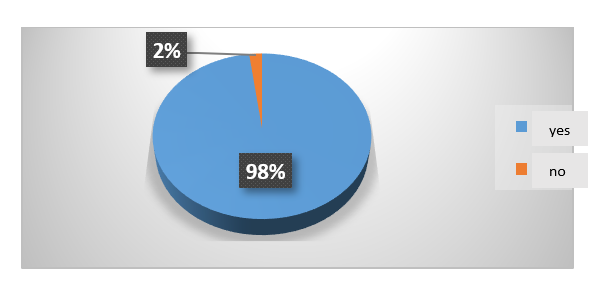
Chart 1.
Do you know what bullying or school harassment is?
Source: http://acosoescolarmexico.mex.tl/267507_Cuestionario-para-alumnos.html
Studies on the topic, such as Awareness and Identification of Bullying by Teachers in Buenos Aires (Lanzillqtti, & Kqrman, 2018), indicate that although many teachers identify different types of cyberbullying, an extensive number of them believe they lack enough tools to intervene in cases where it arises. Another observation is that some teachers confuse harassment with personal cleanliness. This has been identified in other studies (Conde, & Avila, 2018; Felix et al., 2011; Gutierrez, Benitez, Machado, & Justicia, 2012; Martinez-Baena & Faus-Bosca, 2018; Sallan et al., 2013). This finding can be corroborated with the high percentage of the yes answer to this question, which is then ratified with the levels of knowledge about the phenomenon by survey takers.
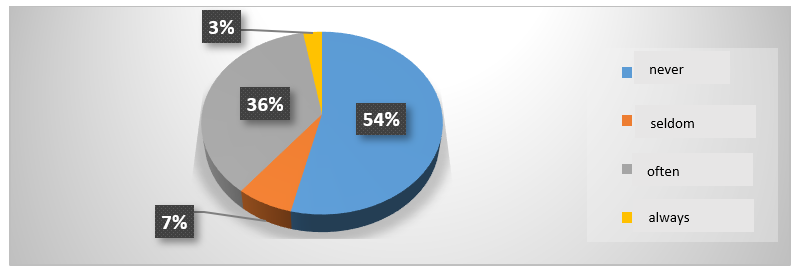
Chart 2.
How often have you felt lonely in school?
Source: http://acosoescolarmexico.mex.tl/267507_Cuestionario-para-alumnos.html
In terms of measures for the bully and the victim, most of the analyzed educational legislation refers to corrective and disciplinary measures for the bully and to protection measures for the bullied student (Hernandez, Lopez, & Ramirez, 2019), this is interesting because it proposes a lot of knowledge about accompanying measures.
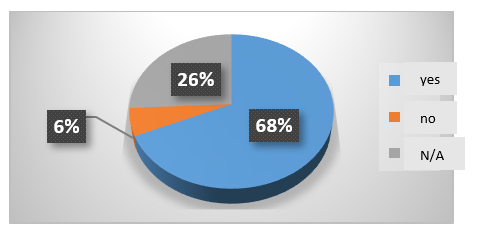
Chart 3.
Have you felt intimidated?
Source: http://acosoescolarmexico.mex.tl/267507_Cuestionario-para-alumnos.html
Due to the distress caused to the victim and to the bully’s aggressive behavior (often enabled by impunity and the learned helplessness of the spectators), bullying must be tackled as a social and group problem (Cuervo et al., 2014; del Barco et al., 2011; Leon, Gozalo, & Polo, 2012; Villamizar & Diaz, 2016). Prevention is the best cure for it and it must be drilled in schools and comprise students, families, and in some cases, pediatricians (as promoters of physical and mental health in infancy) (Armero, Cuesta, & Bonet, 2011).
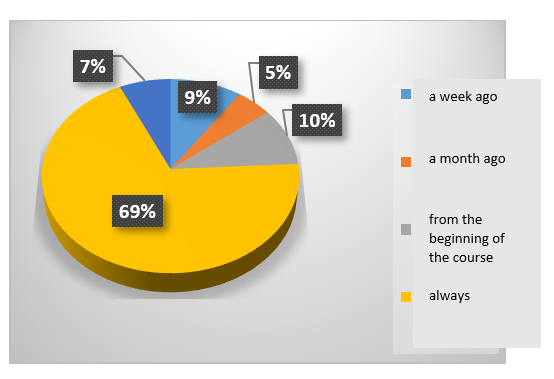
Chart 3.
If your classmates have intimidated you at some point, when did this situation start?
Source: http://acosoescolarmexico.mex.tl/267507_Cuestionario-para-alumnos.htm
This answer contradicts the previous one, which means that the clarity revealed by answers is dubious in terms of intimidation, presenting the need of a final version of the questionnaire to have a better approach to the phenomenon (Caballo, Calderero, Arias, Salazar, & Irurtia, 2012)
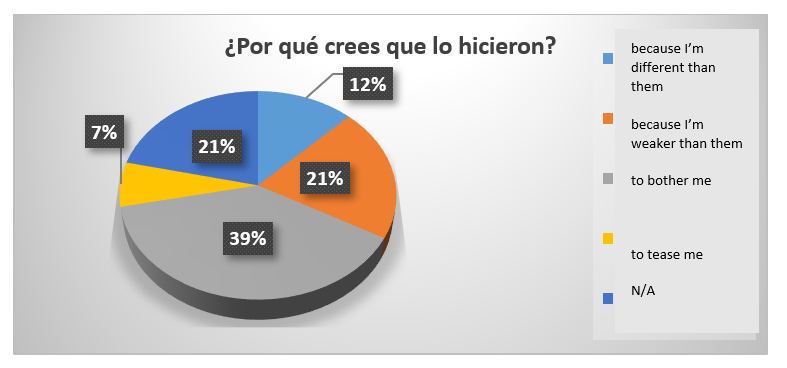
Chart 4.
Why do you think they did it?
Source: http://acosoescolarmexico.mex.tl/267507_Cuestionario-para-alumnos.html
Keeping in mind the most relevant results of the surveys, this work studies the difficulties that bullies impose on socio-moral tasks, while victims display problems in the regulation of emotions and in confrontation strategies (Sanchez et al., 2012). This is clearly identifiable, given the dispersion of data in the answers.
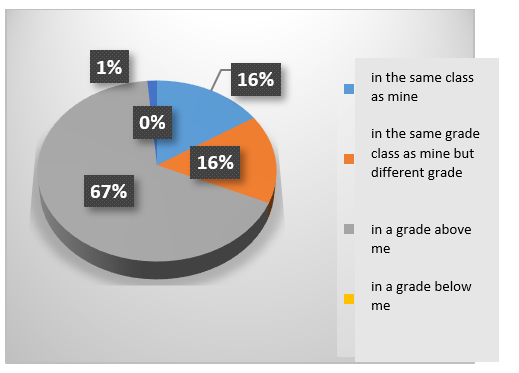
Chart 5.
Who usually intimidates you or your classmates?
Source: http://acosoescolarmexico.mex.tl/267507_Cuestionario-para-alumnos.html
Dissuasive factors were excluded from the final model, but psychotic traits and interaction factors reinforce or maintain antisocial behavior. A relevant increase in risk was observed based on the encouragement of friends (Lopez & Perez, 2016). This type of questions may be compromising and may be connected to loyalty or social uncertainty of being isolated from the social group.
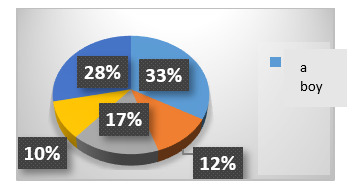
Chart 6.
In which class are the boys or girls who usually intimidate you or your friends?
Source: http://acosoescolarmexico.mex.tl/267507_Cuestionario-para-alumnos.html
The answer to this question had the purpose of identifying a map of hot spots to produce an action plan regarding the phenomenon.
The measurement model provides significant information about the impact of latent variables (relationships with classmates, school climate and teachers’ influence) on victimization and intimidation. Results showed that the most significant effects took place between peer relations and victimization, followed by teacher influence and school climate. Moreover, the final model showed that relationships between classmates and the influence of teachers directly contribute to school bullying (Vargas, 2018), providing very important information to determine places with highest recurrence.
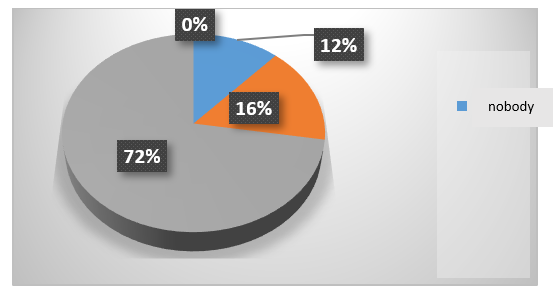
Chart 7.
Who usually puts an end to the intimidation situations?
Source: http://acosoescolarmexico.mex.tl/267507_Cuestionario-para-alumnos.html
Results indicated a better psychological adjustment of victims who had better relationships with their parents, teachers and classmates than of victims with bad quality relationships. These results are discussed and its implications on concrete actions against school violence are shown (Cava, 2011).
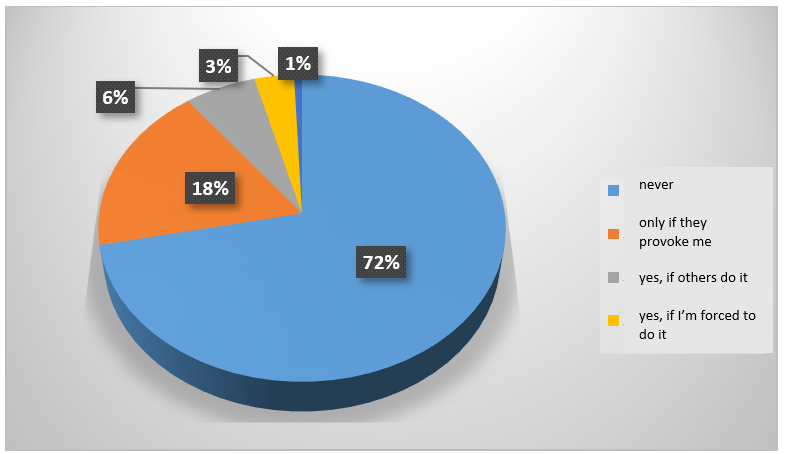
Chart 8.
Would you ever intimidate your classmates?
Source: http://acosoescolarmexico.mex.tl/267507_Cuestionario-para-alumnos.html
Results also show that subjects whose choices lack ethical values are morally disconnected during intimidation situations, and, although with significant differences, they become bullies themselves. It was also found that subjects with less value in their self-representation have more moral disconnections. Thus, it is concluded that the representation of subjects (adhering or not to ethical values) has a correlation with the connection or disconnection from the moral scenario of violence (Paulino, Aviles, & Sales, 2016).
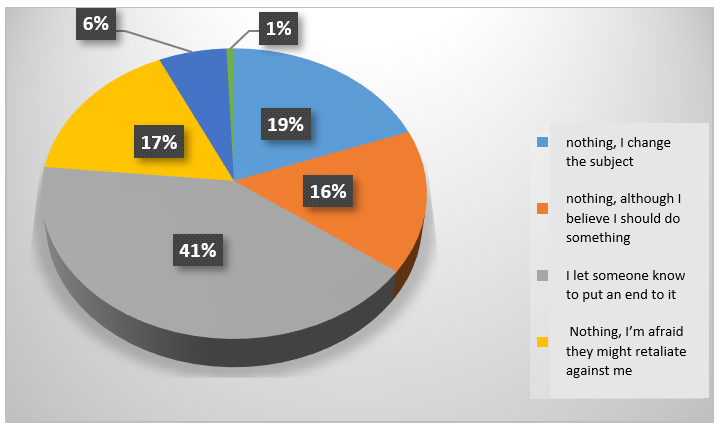
Chart 9.
What do you often do when a classmate intimidates another one?
Source: http://acosoescolarmexico.mex.tl/267507_Cuestionario-para-alumnos.html
Results demonstrate that participants involved in situations of intimidation reported more psychopathologies than students who are not involved in these situations, differences based on grade and gender were also found. Overall, subjects who assume complex roles display larger symptomatic levels and higher rates of distress (Felipe, Leon, & Fajardo, 2013).
This answer may lead to infer that students involved in intimidation of those who show an antisocial behavior have less friends, more disturbing behavior in the classroom and more conflict interacting with teachers, as proposed by Hernandez y Garcia (2014).
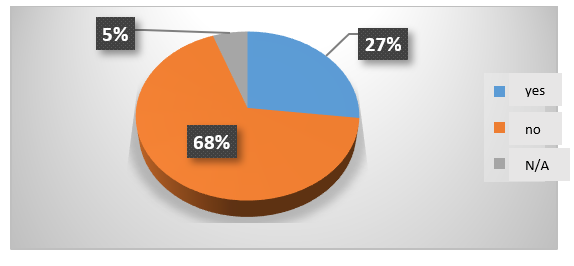
Chart 10.
Have you told anyone about the situation you have been through? (intimidation or abuse)
Source: http://acosoescolarmexico.mex.tl/267507_Cuestionario-para-alumnos.html
In general, the survey’s results are highly significant, namely: 98% of the survey takers are aware of what school bullying is; a statistically significant figure is that 68% of the students have felt harassed at some point in the school; 69% have always felt intimidated. Extremely concerning is the fact that 39% of the students feel that their classmates harass them as a way of picking on them, therefore: what is picking on someone and what is bullying someone? This refers to the lack of awareness regarding the interpretation of the phenomenon, according to the first question. Likewise, the fact that 38% of the bullies are groups of boys/girls allows deducing that gender is not an obstacle when intimidating a classmate. Another fact that may be considered logical to some extent is that 67% of the bullies are from higher courses; an encouraging fact is that 72% of those who put an end to these situations are the victim’s classmates; it is also satisfying to know that 72% of the students would never harass a classmate; 41% state that when a classmate is being bullied they report it to someone. Yet, the silence of victims is troubling, 68% of them have not told anyone about what is going on.
School bullying is a situation that cannot be hidden or concealed any longer. The literature shows alarming figures, and if other studies and data are compared, such as Garaigordobil and Oñederra (2008), it shows the interest and social concern for what is happening with students in educational centers and its awareness regarding the significance of human rights in the area. Students who participated were intended to develop a level of awareness by comparing the laws of the Republic and the UNESCO report (2015), which state that one in three children are victims of school bullying while 246 million children are subject to verbal intimidation; a similar figure in the results of the national survey and this study’s survey reveal that Latin America is the region in the world with the largest number of school bullying cases (70%).
According to the results of the National Survey of Children and Adolescents (ENNA), conducted in 2010 throughout the country, and to the survey that took place in the educational center for this research, it can be inferred that school bullying has an incidence of 70% in Latin America, of 69% in Ecuador and of 67% in Santo Domingo de los Tsachilas. Although the surveys have different nuances, the background is the same and it depends on the implemented actions and programs.
An analysis of the Constitution determined that there is an unavoidable principle that Ecuador is a constitutional State of rights and justice; consequently, school bullying must be eradicated from the country’s private or public educational centers, that every person is equal and must enjoy the same rights, as social, racial, gender or sexual orientation inequalities shall be discriminated “every form of discrimination” shall be enforced by law, as set forth in Article 11 paragraph 2.
Concerning the field of education, the Articles 26 and 27 of the Constitution affirm that the State must guarantee equality and social inclusion in educational centers applying a holistic and comprehensive view to uphold human rights. In terms of the bullying victims’ emotional state, Article 32 and the WHO’s definition of health determine that it is a state of complete bio-psycho-social wellbeing, not just the absence of disease. Article 35 thoroughly explains the will of the State to provide priority attention (in conjunction with Article 44) to children and youngsters given the case of attempted violence. Article 45 safeguards physical and mental integrity. Article 46 paragraph 4 assures protection and attention against any type of violence, abuse, sexual exploitation, or any other.
Characteristics attributed to victimization by aggressors and victims prove that bullying seems to reproduce problems that express a domination/submission model (such as racism and sexism), which do not stem from the school but from a social macrosystem. This characteristic needs to be taken into account to eradicate intimidation.
Just as the Constitution of Ecuador guarantees full development of the human being, the Organic Law of Intercultural Education’s (LOEI) Article 2 paragraph “V” sets forth the eradication of all forms of discrimination; Article 3 paragraph “I” refers to equality of women and men, without discrimination; paragraph “L” emphasizes respect for human rights; paragraph “M” protects and supports students that have experienced violence, abuse, sexual exploitation or any other; finally, paragraph “G” enables comprehensive, autonomous, sustainable and independent development of people to guarantee their realization as human beings.
Conclusions indicate an alarming number of children and youngsters that suffer from school bullying in the educational center; these results are similar to those of UNESCO regarding school bullying in Latin America and to the National Survey of Children and Adolescents (ENNA) conducted in the country in 2010. Results elucidate that there is a gap between constitutional theory and reality, and that it is necessary to undertake workshops, conferences and other means of awareness aimed at children and youngsters student population about school bullying and the risks this evil imposes on Ecuadorian society.
It is concluded that students engaged in intimidation display an antisocial behavior, have less friends, act disturbingly in the classroom and have more conflict interacting with teachers. This can be taken into account when formulating plans to tackle this phenomenon in the institution.
The limited institutional mechanisms available to fight this phenomenon, as well as lack of awareness of victims to resources they may access, favor the development of bullying as a recurring problem that is difficult to identify and solve.
Chart 1.
Do you know what bullying or school harassment is?
Source: http://acosoescolarmexico.mex.tl/267507_Cuestionario-para-alumnos.html
Chart 2.
How often have you felt lonely in school?
Source: http://acosoescolarmexico.mex.tl/267507_Cuestionario-para-alumnos.html
Chart 3.
Have you felt intimidated?
Source: http://acosoescolarmexico.mex.tl/267507_Cuestionario-para-alumnos.html
Chart 3.
If your classmates have intimidated you at some point, when did this situation start?
Source: http://acosoescolarmexico.mex.tl/267507_Cuestionario-para-alumnos.htm
Chart 4.
Why do you think they did it?
Source: http://acosoescolarmexico.mex.tl/267507_Cuestionario-para-alumnos.html
Chart 5.
Who usually intimidates you or your classmates?
Source: http://acosoescolarmexico.mex.tl/267507_Cuestionario-para-alumnos.html
Chart 6.
In which class are the boys or girls who usually intimidate you or your friends?
Source: http://acosoescolarmexico.mex.tl/267507_Cuestionario-para-alumnos.html
Chart 7.
Who usually puts an end to the intimidation situations?
Source: http://acosoescolarmexico.mex.tl/267507_Cuestionario-para-alumnos.html
Chart 8.
Would you ever intimidate your classmates?
Source: http://acosoescolarmexico.mex.tl/267507_Cuestionario-para-alumnos.html
Chart 9.
What do you often do when a classmate intimidates another one?
Source: http://acosoescolarmexico.mex.tl/267507_Cuestionario-para-alumnos.html
Chart 10.
Have you told anyone about the situation you have been through? (intimidation or abuse)
Source: http://acosoescolarmexico.mex.tl/267507_Cuestionario-para-alumnos.html
