062022
39
12052021
22042022
 Martha Isabel Bojórquez Zapata mbzapata@correo.uady.mx
Universidad Autónoma de Yucatán, Mexico
Resumen:
Este estudio tiene como objetivo analizar el estado actual del arte sobre los factores de competitividad de las pequeñas y medianas empresas hoteleras, aplicando una revisión literaria sistemática e internacional con foco en Europa. Este estudio optó por una revisión sistemática involucrando el análisis de documentos, artículos, disertaciones y trabajos académicos internacionales que presentaron resultados de investigación teórica y empírica. La investigación se realizó de enero a mayo de 2021 utilizando bases de datos en línea y motores de búsqueda. Los estudios seleccionados se centran en las finanzas, la innovación y el marketing como los principales factores generadores de competitividad en las pymes hoteleras. La mayoría se han publicado en países europeos desde 2014. Algunas características coinciden con diversos contextos geográficos, como la importancia de la rentabilidad y la financiación, el uso de la información financiera, la innovación de productos y procesos, el posicionamiento en el mercado, el conocimiento de la competencia y la satisfacción del cliente. También se analizan algunas implicaciones para Europa.
JEL Classification: M31, L83, Z33, Z39
Palabras clave: PYMES hoteleras, competitividad, innovación, Finanzas, marketing.
Abstract: This study aims to analyse the current state of the art regarding the competitiveness factors of small and medium-sized hotel companies, applying a systematic and international literary review focusing on Europe. This study opted for a systematic review involving the analysis of documents, articles, dissertations, and international academic works that presented theoretical and empirical research results. The research was conducted from January to May 2021 using online databases and search engines. The selected studies focus on finance, innovation and marketing as the main factors that generate competitiveness in hotel SMEs. Most have been published in European countries since 2014. Some characteristics coincide with various geographical contexts, such as the importance of profitability and financing, the use of financial information, product and process innovation, market positioning, knowledge of the competition and customer satisfaction. Some implications for Europe are also analysed.
Keywords: Hotel SMES, competitiveness, innovation, finance, marketing.
Review articles
Main Competitive Factors in European Hotel SMEs*
Principales factores competitivos de las PYMES hoteleras europeas
Martha Isabel Bojórquez Zapata mbzapata@correo.uady.mx
Recepción: 12 Mayo 2021
Aprobación: 22 Abril 2022
Publicación: 30 Junio 2022
In the economies of different countries, small and medium-sized companies are the main drivers of competitiveness and sustainability. Hence, this type of business is essential at the international, national and local levels (López, 2018, p. 81; Akadiri et al., 2019, p. 1483; Gârdan et al., 2020, p. 5). The study of the competitiveness of small and medium-sized enterprises (SMEs) in the field of tourism in crisis conditions has been approached only to a small extent in the literature; even less research has been done to identify the intimate mechanisms of competitiveness in the current economic, social and biological crisis (Du et al., 2018, p. 461; Skrinjaric, 2019, p. 5; Ramón et al., 2020, p. 17). In this context, efforts to analyse the perceptions of those who make decisions about the adaptation of SMEs in the field to the challenges listed above acquire some relevance (Bianchi et al., 2019, p. 306; Gârdan et al., 2020, p. 9; Fonseca and Sánchez 2020, p. 7). According to Gursoy and Chi (2020, p. 527), the hospitality and tourism industries are the sectors most affected by the COVID-19 pandemic in Europe and are currently suffering the most immediate repercussions.
Since April 2020, tourism in the region has been temporarily halted because of the coronavirus (COVID-19) pandemic. An impact scenario shows that a fall in tourism could lead to a 1% decrease in the growth of gross domestic product (GDP) in Europe, while total employment could decrease by two percentage points in that region. The pandemic has not only caused a humanitarian disaster but also paralyzed vital sectors such as tourism, which was one of the economy’s first and most affected sectors (Mulder, 2020).
It is relevant to discuss which factors could be the ones that affect competitiveness in SMEs by finding out the relation between how the different competitive factors and studies are related. Companies in Europe need to apply that international recognition to their industry. An important precedent is the work of Mulder (2020), whose findings are contrasted in the discussion section. The presented article consists of five sections: introduction, methodology, literature review, discussion of results and conclusions.
To reduce research risk, the literature review ensures a methodical and transparent process carried out systematically through a specific topic in the analysis and identification of key scientific contributions (Tranfield et al. 2003, 205). For example, the recent reviews on competitiveness in SMEs mentioned above present valid and recurring scientific activity in various fields, such as tourism (Cong and Thu 2020, p. 5; Gruenbichler et al. 2021, p. 45; Markus and Rideg 2021, p. 400) and European studies (Pavlatos 2015, p. 760; Bocconcelli et al. 2018, p. 26; Floricic 2018, p. 162; Sołoducho-Pelc 2020, p. 25).
The application of the methodology based on a systematic review was transferred from the health sciences to management by Tranfield et al. (2003). A systematic review is developed in three stages based on the characteristics of the model proposed by the authors-a total of ten sentences are listed below.
Planning the study that is going to be carried out is the first stage; that is, delving into the subject and pointing out the keywords, as well as the bases where the investigation will be carried out and clearly identifying the inclusion and exclusion criteria. All of the above integrate the first three phases.
To carry out this study, the theoretical or empirical research articles considered were those in which competitiveness in hotel SMEs was investigated. It is important to point out that the language was not relevant. Subsequently, other scientific products such as dissertations, theses, book chapters and books were also incorporated into the review. In carrying out the research, the criteria applied were “hotel SMEs + competitiveness factors + Europe” and some other combinations with their synonyms in singular and plural in Spanish and English.
For the study, the databases used were Emerald, Springer, Taylor & Francis, ScienceDirect, EBSCOhost and Dialnet (Damián and Suarez-Barraza 2015, p. 150; Delgado et al. 2016, p. 1100). Theses repositories, such as TDR, Recolecta, Dehesa, TESEO, Dart-Europe, Open Grey, OATD and NDLTD, were also used.
Scientific documents located in the title, abstract, keywords or both in the search terms ‘hotels, competitive factors, European SMEs’ or their combination of synonyms published between 2000 and 2020 were the inclusion criteria. With this period, the work of de Tsai et al. (2009, p. 5) is followed up. Likewise, considering Tranfield et al. (2003, p. 207), the year 2020 is the end date since, in the first five phases, the realization was from January to May 2021.
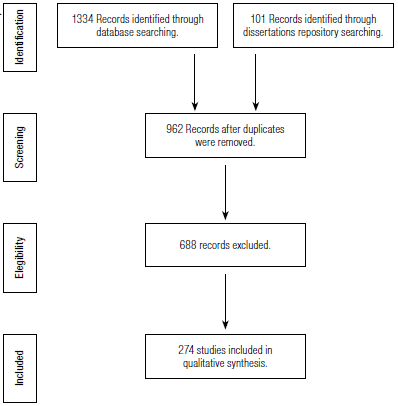
The review was carried out in the second stage. The document search, study selection and quality assessment were carried out in the fourth and fifth stages. The following is an example of a search strategy in English-‘Competitiveness Factors’ OR ‘hotels’ AND ‘SME’ OR ‘SMEs’-and Spanish-‘Factor de competitividad’ U ‘hotel’ AND ‘Pyme’ U ‘Pequeña y mediana compañía europea’ (2000-2020)-in ScienceDirect. For the study selection process, the authors used the PRISMA flowchart (Figure 1) as a tool to improve systematic reviews in the study selection and identification phases (Moher et al., 2009, p. 10).
The review was carried out in stage 2. In phases 4 and 5, the documents were investigated, the studies were selected, and the quality of the works was analysed. This is an example of a search strategy in English-“Competitiveness Factors” OR “hotels” AND “SME” OR “SMEs”-and Spanish-‘Factor de competitividad’ U ‘hotel’ AND ‘Pyme’ U ‘Pequeña y mediana compañía europea’ (2000-2020)-in Emerald. The PRISMA flowchart (Figure 1) outlines the study selection process (Moher et al., 2009, p. 10).
From the repositories and databases, 1435 documents were collected, leaving 962 related to the object of study. Of these, 120 were excluded for lack of theory and methodology quality contribution. Another 568 were not consulted because they are not open access. Thus, 274 documents were analysed, the final sample of the literature.
In phases 6 and 7, the studies were obtained and synthesized, and a matrix was created to analyse and compare similar data. Among the data recorded are the year of publication, author’s name, type of document, title, language, journal and country. Other strategic objectives were identified in order to achieve the objective of this study-finances, marketing, human resources, business intelligence, legal situation, strategic management, quality and innovation. Phase 8 was carried out in two stages, (1) statistical information was obtained from the studies, and (2) the studies were grouped into common themes to better analyse them.
It was found that 63% are scientific articles, 25% are book chapters, 7% are dissertations, 3% are abstracts and 1% are case studies. Figure 2 shows that 85% of the documents have been published since 2007.
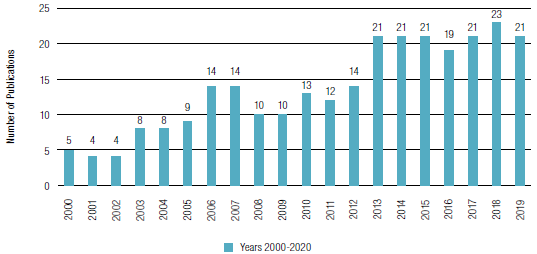
Since 2014, there has been a significant increase in this research topic. The scientific information obtained was found in various journals. It was identified that the 173 articles reviewed were published in 107 journals; additionally, it was recorded that of the total number of journals mentioned, 35 were in quartile 1 of the Scimago Journal and Country Rank. Similarly, in dissertations, no particular university was found to be promoting a study on this topic; all 19 theses come from different universities. According to the tourist regions of the United Nations World Tourism Organization (UNWTO, 2020, p. 47), 55% of the academic production is concentrated in Europe, 32% is in America, 8% is in Asia and the Pacific and 1% is in Africa. The remaining 3% of the production is located in two or more regions, known as intermediate regions.
In the geographical scopes of the study, 72% of the European studies were identified as local, 20% were defined as regional and 6% were international. Theoretical studies correspond to 2% and do not have a geographic scope. Of the studies, 40% emphasized finance and innovation factors, 35% dealt with marketing, 10% focused on strategic management, 7% related to human resources, 5% were on quality and 3% studied legal situations. Regarding the methodology used, 82% are quantitative studies, 11% are mixed and 7% are qualitative studies.
The substantive theory was the theoretical support of most of the articles (Sautu et al., 2005, p. 6). This theory gathers those terms that will support the analysis of competitiveness factors and hotels. Some theories offer deeper insights than others (Sautu et al., 2005, p. 7). The central theme focuses on the importance of competitive factors in SMEs.
The findings obtained from the literature review were grouped into three essential factors. The analysed research was summarized, and the p factors and sub-factors are shown in Figure 3. Some articles contribute to more than one dimension and subtopic.
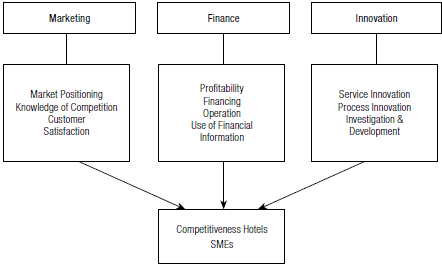
According to Padilla (2016, p. 15), competitiveness in a company is associated with factors such as strategic management (Perea and Rivas, 2011, p. 10; Molina and Sánchez, 2016, p. 105), finances (Perea and Rivas, 2011, p. 11; Molina and Sánchez, 2016, p. 106; Argúelles et al., 2017, p. 82; Molina et al., 2018, p. 50; Kallmuenzer and Peters, 2018, p. 68; Lima et al., 2019, p. 235; 2020a, p. 120; 2021, p. 146), productivity (Perea and Rivas, 2011, p. 14; Molina and Sánchez, 2016, p. 106; Argúelles et al., 2017, p. 83; Molina et al., 2018, p. 52), costs (Kallmuenzer and Peters, 2018, p. 69; Lima et al., 2019, p. 236; 2020a, p. 121; 2021, p. 147), added value (Argüelles et al., 2017, p. 84; Villacís, 2018, p. 5; Molina et al., 2018, p. 53), marketing (Becerra et al., 2016, p. 152; Ramírez, 2017, p. 5; Molina et al., 2018, p. 53; Marulanda and Restrepo, 2020, p. 185), level of exports (Kallmuenzer and Peters, 2018, p. 69), innovation (Aarstad et al., 2015, p. 357; Nieves et al., 2016, p. 160; Pikkemaat et al., 2019, p. 187), product quality (Perea and Rivas, 2011, p. 12; Molina and Sánchez, 2016, p. 107; Villacís, 2018, p. 6), etc.
Building competitive tourism establishments implies promoting changes in culture from a vision restricted to clients due to loyalty and referring to assuming management processes in which it is possible to understand potential clients and spaces of permanent knowledge so that daily activities are dynamic and open. Accordingly, a company interested in expanding to international markets seeks to optimize resources, reduce costs and improve productivity through business management. Hotel SMEs become the basis for them to approach management from competitive development and continuous improvement (Perea and Rivas, 2011, p. 13; Molina and Sánchez, 2016, p. 105; Becerra et al., 2016, p. 153; Fernández, 2017, p. 40).
Accordingly, firm competitiveness is seen as the degree to which customer satisfaction and shareholder value interact through continuous improvement of service quality, leveraging strengths, and implementing and responding to them through financial strength (Cong and Thu, 2020, p. 305). SMEs are different in terms of their organizational structure, technology, management style, labor, capital, and competition (Abosede et al., 2016, p. 320).
Although the hospitality sector has particular characteristics, such as being impacted by seasonality, most of them are domestic businesses, referring they are very independent. Therefore, the competitiveness of SME hotels is highly conditioned to the management skills of the entrepreneurs (Fraj et al., 2015, p. 35; Cong and Hai, 2015, p. 85).
To survive, companies must continuously adapt to a turbulent business environment by developing different internal knowledge and skills, which affect their profitability (Skuflic and Mlinaric, 2015, p. 480; Dimitrić et al., 2019, p. 1980). For Sensini and Bello (2021), SMEs show common practices in financial behavior because of the relationship between investment and financing decisions (Stowe et al., 1980, p. 975; van Auken and Tseng, 1993, p. 60; Helleloid and Sheikholeslami, 1996, p. 25).
For Lima et al. (2016, p. 5), in European SME hotel companies, the use of financial information, specifically the balance sheet, is essential for management. These authors, based on a study carried out in hotel SMEs in Portugal, established that financial ratios and the analysis of indicators are directly related to the decision-making process. They also indicate that studies carried out in different European countries have shown that financial analysis is one of the most important management tools for SMEs in the hospitality sector. In the current scenario of global competition, Lima et al. (2020b, p. 94) signal that it is increasingly important for managers to measure hotel performance, making decisions based on indicators and management tools. RevPAR (revenue per available room) and occupancy rates are the most common operational indicators. The former appears as one of the more complete indicators, which considers all sources of hotel revenues. To be as profitable as possible is the primary objective of any hotel, especially in the private sector; therefore, it is essential to increase revenues and reduce costs. For this reason, managers are primarily looking to increase lodging revenues. However, it is also important to have a view from a total revenue management perspective, as revenue from other departments must be considered (Santos et al., 2016, p. 5; Lado et al., 2017, p. 3140; Santos et al., 2018, p. 195).
Regarding European hotel SMEs, some authors have highlighted that these companies resort to external sources of financing as they are often unable to finance themselves (van Auken and de Lema 2003, p. 20). Moreover, given financial constraints, the choice tends to fall on new capital (Tyejbee and Bruno 1983, p. 1055). They also use medium and long-term debt to finance current assets, according to authors such as Carter and van Auken (1990, p. 75). For hotel companies, given their asset structure, it influences their financial performance. Fixed assets determine the high volatility of results; the same capital structure can facilitate the granting of loans, acting as collateral (Chen et al. 2014, p. 370).
According to Mueller and Sensini (2021, p. 120), based on a study carried out on Italian hotel SMEs, the most profitable companies prefer to use profits instead of debt to finance investments. In addition, the high level of tangible assets on SMEs means that these companies can obtain more financing since they can guarantee creditors and, in turn, reduce the risks to obtain said financing and the asymmetry of information. Many SMEs finance their income growth with debt growth. Being these debts preferably short-term. Finally, it is worth mentioning that these young companies have greater difficulty in acquiring financing.
According to Krugman (1991, p. 485), a company’s competitive success is based on its cost efficiency, innovations, technology and marketing activities and other internal factors of the organization. Customer loyalty as an element of marketing in hotel SMEs, for Hill and Jones (1996, p. 56), is a function of the company’s ability to satisfy needs. To achieve this, it will be necessary to focus on the client, structure, worker attitudes and mechanisms to bring clients to the organization, as well as satisfy needs through personalization of services and response time.
For Stanton et al. (2000, p. 65), positioning itself in the market refers to the percentage of total service sales in a given period in a specific market achieved by a company. Furthermore, Jeffrey and Caron (2002, p. 62) pointed out that marketing involves knowing the competition and creating pricing policies and customer satisfaction services.
Blesa et al. (2009, p. 235) and Yadav and Tripathi (2014, p. 29) indicated that marketing strategies lead to the search for the delivery of a superior value to the client thanks to the development of a greater capacity to perceive the market, develop response and adaptation capacities through innovation and imitation capacities, and interact with clients. In this way, marketing intelligence processes help to define an organizational competence that facilitates the competitive development of the company.
Martínez et al. (2010, p.170) and Shehu and Mahmood (2014, p. 460) stated that the impact on competitiveness is the sum of knowledge of the competition, market positioning and customer satisfaction. Thus, marketing, which is part of the internal factors of a company, impacts organizational competitiveness as it is one of the many factors added to achieve it. Hassen and Singh (2020, p. 100), from a study conducted in Europe, suggest that hotel SMEs establish customer-centric strategies to ensure long-term business success. Correspondingly, companies should consider sharing information so that they can survive in competitive business environments and achieve superior business performance. Gyulavári and Kenesei (2012, p. 11) and Webster et al. (2014, p. 15) pointed out that a competitive firm or company offers services to consumers in such a way that allows them to obtain a higher profit than the competition.
Alhakimi and Mahmoud (2020, p. 50), based on a study carried out in Croatia, stated that hotel SMEs must support innovative behaviour, generate new offers and participate in proactive marketing. It is important that these entities seek continuous improvement of their processes and services and invest in new technologies. To be competitive, they must know the competition by exploring the market to understand the strategies and activities they employ, the use of price adjustment, and the introduction of new or better offers (Szopinski and Staniewski 2016, p. 19). Being proactive, hotel SMEs can improve by researching market trends and the needs, interests and satisfaction of customers (Lara et al. 2017, p. 432).
The capacity for innovation is the implementation and creation of technology applied to new systems, policies, programs, products, processes and services for the organization (Liao et al., 2009, p. 165; Adomako, 2018, p. 9; Biemans and Griffin, 2018, p. 115). Weerawardena (2003, p. 420), Gerguri and Ramadani (2010, p. 30), Mazur and Zaborek (2016, 112) and Moen et al. (2018, 16) defined innovation as a modification of products, processes, services, and organizational and marketing systems to create customer value.
According to Domi et al. (2019, p. 136), in a study carried out on SMEs, those located in the United Kingdom tend to receive less financial support for the generation of innovation than SMEs in France, Germany and Spain. The empirical findings of Hongyun et al. (2019, p. 1240) in a study carried out on European hotel SMEs suggest that the development of a cutting-edge information technology infrastructure impacts quite considerably the capacity of companies to work across various geographic and organizational boundaries, enabling them to possibly create a competitive advantage in the current business environment. Hotel SMEs, with the necessary investment, can create value for the client and the company, directly or indirectly, depending on the cultural context. These same authors identified that in Europe, in hotel SMEs, human skills, information technology infrastructure and management style are fundamental to innovation. The findings also reveal that cost and cultural factors have a negative but significant relationship with the adoption of innovation.
In a tourism context (Williams and McGuire, 2005, p. 35; Domi et al., 2019, p. 137), hotel SMEs must particularly focus on innovation in both services and processes, driven by demand due to their nature of intensive service that depends on the quality of customer experiences and their satisfaction or dissatisfaction. For Wikhamn (2019, p. 105), satisfied customers represent the reputation and image of the hotel, as well as its position in the competition for customers, which is a non-financial performance indicator. Furthermore, changes in consumption patterns among tourists force SMEs to improve their operations in an attempt to remain competitive (Zehrer and Muskat, 2014, p. 350). In response, tourism SMEs should better understand clients’ needs and desires and act accordingly during each service encounter (Tsai et al., 2009, p. 6; O’Neill et al., 2010, p. 145; Tsai and Yang, 2014, p. 351).
It was observed that the studied hotel SMEs do not follow a methodology regarding strategies to promote business growth and the financing of their activities. There is no perceived interest in the formulation, implementation and evaluation of strategies to achieve goals and objectives, which could generate instability in the long term. This coincides with the results of Tsai et al. (2009, p. 6) and Perea and Rivas (2011, p. 10), who affirm that, in SMEs, the administrator or owner provides the capital. However, the management is empirical; the infrastructure of the companies is focused on meeting the demand and not on planning; there is a lack of vision and mission, the definition of objectives, goals and defined strategies to achieve said objectives and goals.
One of the main reasons for the closure of these companies corresponds to the impossibility of accessing the financial resources that SMEs require for their operation. Hence, the financing problem is of great relevance for hotel SMEs in Europe; without access to financing sources and sufficient flows, the company cannot operate and is less likely to survive. The above coincides with what Tsai et al. (2009, p. 7) mentioned, SMEs will seek the most appropriate form of leverage, which is related to the Pecking Order theory developed by Myers and Majluf (1984, p. 190), in which a hierarchy is established according to financing decisions, prioritizing internal financing, followed by debt and finally the capital increase.
It has been identified that the hotel business operates in an environment of extreme competitiveness on a global scale, and hotel managers make decisions in markets with very particular characteristics. Thus, it is necessary to have management support tools and, in the case of the hotel industry, operational ratios and indicators-such as RevPAR and TRevPAR-that analyze income from accommodation and focus on income. In addition, revenue management deals with supply and demand variables to maximize profitability, acting on prices and available capacity (Santos et al., 2016, p. 5; Lado et al., 2017, p. 3140; Santos et al., 2018, p. 195; Lima et al., 2020b, p. 121).
The findings also confirm the importance of customer relationship management in the hospitality industry concerning the marketing factor. In short, it is identified that hoteliers can successfully improve business profitability and performance by redefining customer relationship management strategies through restructuring operations. Successful customer relationship management is expected to increase customer loyalty, retain profitable customers and generate more revenue for hotels; hence, its performance and overall survival. It should be clear that customer relationship management is more than a software tool for sales; it is a marketing business strategy that seeks customer satisfaction to achieve retention and loyalty, which coincides with previous studies (Gyulavári and Kenesei, 2012, p. 11; Webster et al., 2014, p. 16).
Finally, in terms of innovation in hotel SMEs in Europe, it was observed that the types of innovation adopted, to a greater extent, are related more to the service than the process since the main motivation to carry out the innovations was to satisfy the needs imposed by demand. However, they are still not very relevant compared to the innovation processes of large companies. It was found that most of them made service innovations, either through changes to improve existing ones or by expanding their variety of services.
In Portugal, Spain, Germany, France, the Netherlands, Great Britain, and Italy, for process innovation, 90% of SMEs acquired goods, equipment or furniture, while 55% made changes or improvements in how the company provides the hotel service. The above coincides with what Aarstad et al. (2015, p. 357) and Nieves et al. (2016, p. 160) stablished, SMEs, due to their size and economic capacity, lack the necessary resources to develop and implement innovative characteristics in their processes and services.
The competitiveness destination concept is related to touristic SME competitiveness. Competitiveness must be conceptualized within sustainability principles and implemented in the SME hotel process. Some internal and external triggers should be capable of measuring it in the companies’ environment.
The hotel industry has played an important role as an engine for growth and job creation in Europe. In general, the marketing activities of European hotel SMEs are owner or manager driven and defined in terms of tactics to attract new businesses, focusing on competition, customers and the business environment. The core components of marketing are related to the activities that surround them and concentrate on the client- and market-focused variables and a unique proposition of value generation.
The sector’s financial responsiveness to economic conditions supports job creation and economic growth while making it vulnerable to conditions and policies that proliferate in a recession. Measures taken in times of the pandemic are likely to undermine the capacity of this sector to generate growth. Furthermore, innovation is vital in an organization since it allows the owner or manager to create the conditions to respond efficiently to the changes generated by the market to obtain sustainable competitive advantages on time. In developing countries, SMEs are responsible for a large part of the added value, stimulating entrepreneurial activities, job creation and increased exports.
Finally, it is necessary to comment that the owners or managers of SMEs can achieve a sustainable competitive advantage by fostering a strong market orientation derived from participation in innovative practices, a central factor in profitability, long-term growth and survival of SMEs.